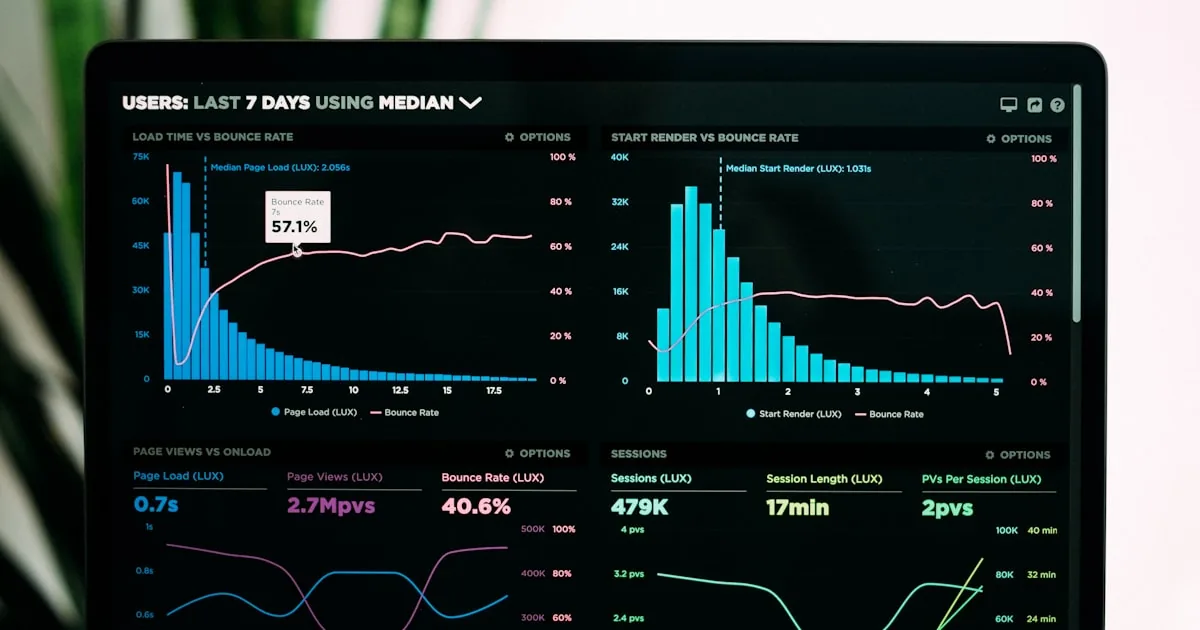
Recent engineering data from modern issue trackers like Linear reveals a fundamental shift: AI is no longer just an autocomplete assistant for individual developers, but a team-wide workflow participant. However, while the volume of generated code has skyrocketed, overall project completion rates tell a much more nuanced story.
This article examines real-world AI usage patterns across software engineering teams, analyzing why faster code generation often creates unexpected bottlenecks in code reviews, context switching, and system architecture.
From Code Autocomplete to Autonomous Task Execution
A year ago, AI in software development mostly meant inline autocompletion—a smarter Tab key that suggested the next few lines of code. Today, the usage pattern has evolved dramatically. Teams are increasingly delegating multi-step tasks to agentic tools: scaffolding entire pull requests, summarizing long issue threads, generating integration test suites, and triaging customer bug reports.
According to recent industry telemetry, developers are spending up to 40% less time writing boilerplate logic manually. Instead, they are initiating asynchronous background tasks, prompting AI models to implement features based on issue descriptions, and then reviewing the resulting diffs.
However, this transition from line-by-line typing to high-level delegation has exposed a new operational challenge: the code review crisis.
The Review Bottleneck: Reading vs. Writing Code
When code generation costs drop to near zero, pull request volume surges. But code review throughput does not scale automatically. Reviewing 500 lines of AI-generated code often takes significantly more cognitive energy than reviewing code written by a colleague whose thought process you understand.
Senior engineers in high-velocity teams report feeling overwhelmed by "AI pull request spam." Because the AI can instantly generate syntactically correct and well-formatted code, pull requests look plausible at first glance. Yet, subtle edge cases, architectural mismatches, and improper error handling frequently hide under the polished surface.
This shifts the primary bottleneck of software engineering from writing code to verifying correctness. When teams focus solely on generating more code faster, they inadvertently create review backlogs, leading to longer merge times and increased context switching for senior reviewers.
Context Switching and the Cognitive Load of Prompting
Another key insight from team data is the impact of context switching. Developers working alongside multiple AI agents often find themselves juggling parallel conversations across different tools—CLI agents, web interfaces, and IDE plugins.
While an agent works asynchronously on one ticket, the developer switches to another task. When the agent returns with a pull request, the developer must re-hydrate their context for the original ticket to review the output.
Far from reducing cognitive load, unmanaged AI usage can fragment a developer's focus into smaller, disjointed attention spans. High-performing teams are realizing that workflow structure matters far more than model speed.
How High-Performing Teams Adapt Their Workflows
Teams that successfully turn AI tools into real productivity gains do not simply incentivize higher code output. Instead, they rethink their team processes around three core practices:
First, they demand tighter, highly specific task specifications. AI agents excel when given clear constraints, deterministic tests, and detailed context. Teams that invest time in writing precise issue specs see a dramatic drop in hallucinated code and unneeded refactoring.
Second, they embrace test-driven AI generation. By writing failing tests first or instructing agents to produce unit tests alongside implementation code, teams create automated guardrails. This allows reviewers to focus on architectural alignment rather than manually checking edge cases.
Third, they use AI for comprehension and documentation rather than just production. Top engineering teams frequently use models to explain legacy codebases, map complex dependencies, and generate internal system documentation. Using AI to reduce onboarding friction and improve system transparency often yields higher ROI than generating another feature PR.
The Future: From Code Producers to System Architects
The latest data on AI usage patterns points to an inevitable conclusion: software engineering is evolving from manual construction to system orchestration.
As AI models continue to handle routine coding tasks with greater autonomy, the value of a software engineer will increasingly lie in system design, domain knowledge, security auditing, and product intuition. Generating code is no longer the rate-limiting step of software development; managing system complexity and delivering true user value is.
Teams that adapt to this reality—by optimizing for review quality, clear specifications, and deep focus rather than raw code volume—will lead the next generation of software engineering.


Loading comments…