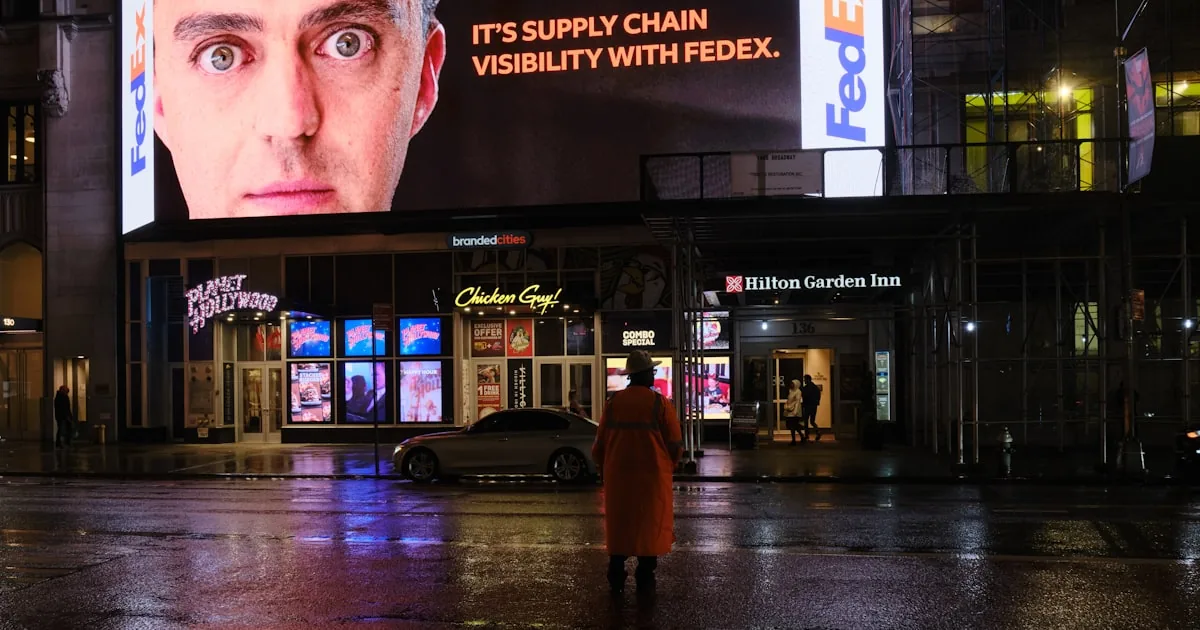
The inevitable pivot has finally arrived. Today, the launch of ads.openai.com signals a fundamental shift in the artificial intelligence landscape: ChatGPT is officially introducing advertising.
For years, the tech community has speculated about how OpenAI would sustainably monetize the staggering compute costs required to serve hundreds of millions of free users. Subscriptions, it turns out, are not enough. While the introduction of ads might seem like a standard Silicon Valley playbook move, integrating sponsored content into a conversational AI interface carries profound implications. We are transitioning from an era of impartial, objective digital assistants into a new paradigm where our AI companions have financial incentives. The honeymoon phase of pure, uninterrupted AI chat is over.
The Brutal Reality of Compute Costs
To understand why OpenAI is making this move now, we have to look at the brutal economics of generative AI.
Training foundational models costs hundreds of millions of dollars, but inference—the computational power required to generate responses for every single user query—is a relentless, ongoing hemorrhage of cash. The $20-per-month Plus subscription, while popular, likely only subsidizes a fraction of the massive user base that relies on the free tier. As models become more complex and capable of deeper reasoning, the cost per query inevitably rises.
In the history of the consumer internet, there has only ever been one reliable way to monetize a massive, free user base: advertising. Google realized this in 2000 with the launch of AdWords, pivoting from a clean, academic search engine into an advertising juggernaut. OpenAI is simply facing the same gravity. The dream of a purely subscription-based ecosystem has collided with the reality of GPU server bills.
How Do You Put Ads in a Chatbot?

The most pressing question is implementation: how exactly does one inject an advertisement into a natural language conversation? In traditional search engines, the UI clearly demarcates sponsored links at the top or side of the page. But a chat interface is intimate and linear.
Will OpenAI opt for traditional banner ads flanking the chat window? That would be the least intrusive, but also the least effective. The more lucrative—and controversial—approach would be sponsored responses or inline product placements.
Imagine asking ChatGPT to help you plan a trip to Tokyo, and the AI seamlessly recommends a specific hotel chain or airline because they won the bid for that conversation's intent. Or, as a developer, you ask for a system architecture recommendation, and the AI suggests a specific cloud provider's managed service, complete with a small "sponsored" tag.
This introduces a radical new concept: intent-based bidding in a conversational context. Advertisers won't just bid on keywords; they will bid on user states and complex queries, targeting users precisely when they are asking for guidance.
The Trust Deficit and Anthropomorphism

The core issue with ad-supported AI isn't just annoyance; it is the erosion of trust.
Over the past few years, we have subtly anthropomorphized these chatbots. We converse with them, we ask them for life advice, we trust them to debug our code impartially. When ChatGPT recommends a software tool, we assume it is synthesizing the consensus of its vast training data to provide the objectively best answer.
Advertising fundamentally shatters that illusion of neutrality. If an AI suggests a product, how much of that recommendation is driven by genuine utility versus a sponsored bid? Even if OpenAI strictly labels sponsored content, the psychological impact of receiving an ad from a conversational entity is vastly different from seeing a banner on a webpage. It feels closer to a trusted mentor casually trying to sell you a timeshare.
This shift will force users to develop a new kind of digital literacy. Just as early internet users had to learn to distinguish between organic search results and paid links, the next generation will have to learn to critically evaluate AI responses for subtle biases introduced by monetization.
The Ripple Effects on the Industry
OpenAI's move will likely trigger a domino effect across the AI industry.
Will Anthropic's Claude position itself as the premium, ad-free alternative? (Given their recent $1.5B copyright settlement, they might also be feeling the financial squeeze). Will Google, the undisputed king of search ads, aggressively ramp up monetization in Gemini now that the seal is broken?
For marketers, this is the dawn of a new discipline. Prompt optimization is no longer just about getting the AI to output the right format; it's about intercepting the user's intent. AIO (AI Optimization) will rapidly evolve to include paid placements within the context window itself.
Conclusion
The launch of ChatGPT ads is a watershed moment. It reminds us that, beneath the veneer of magical technology, AI companies are businesses bound by the harsh realities of infrastructure costs. The AI assistant of the future will not be a disinterested, omniscient oracle. It will be a highly sophisticated, interactive billboard.
As we navigate this new ad-supported AI era, we must adjust our expectations: the machine is still talking to you, but now, someone else is paying for its words.


Loading comments…