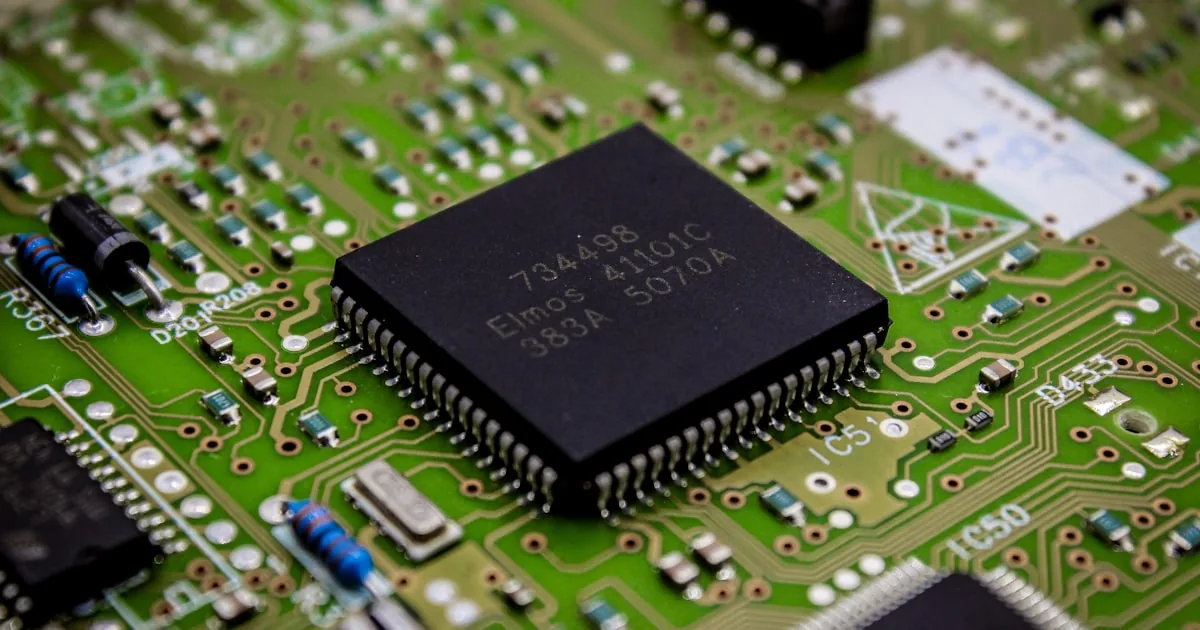
AMD's recent acquisition of startup Taalas has sparked an intense debate across the tech industry about the future of artificial intelligence hardware. By attempting to burn large language model weights directly into physical silicon circuits, the industry is testing whether hardwiring intelligence is the ultimate answer to AI's unsustainable energy and latency bottlenecks.
For the past few years, the prevailing consensus in AI deployment was simple: software moves fast, and hardware must remain flexible. Programmable GPUs from Nvidia and AMD dominated because machine learning architectures evolved every few months. However, as inference workloads scale to billions of daily queries, the energy cost of moving data between memory and processors has hit a physical wall.
The Memory Wall of General-Purpose GPUs
To understand why etching models into silicon is such a radical proposition, one must look at how traditional inference works. When an LLM generates text, it reads billions or trillions of parameters stored in high-bandwidth memory (HBM) for every single token produced.
In modern data centers, standard GPUs spend the vast majority of their power consumption not on actual mathematical computation, but on shuttling bytes across high-speed interconnects. Memory bandwidth has become the primary bottleneck of modern computing. HBM chips are extraordinarily expensive, difficult to manufacture, and power-hungry.
Even with specialized software optimizations like vLLM or TensorRT-LLM, software can only optimize memory access so far. The underlying physics remains unchanged: as long as weights reside in separate memory modules from the processing cores, throughput remains constrained by physical distance and electrical resistance.
Etching Intelligence directly into Transistors
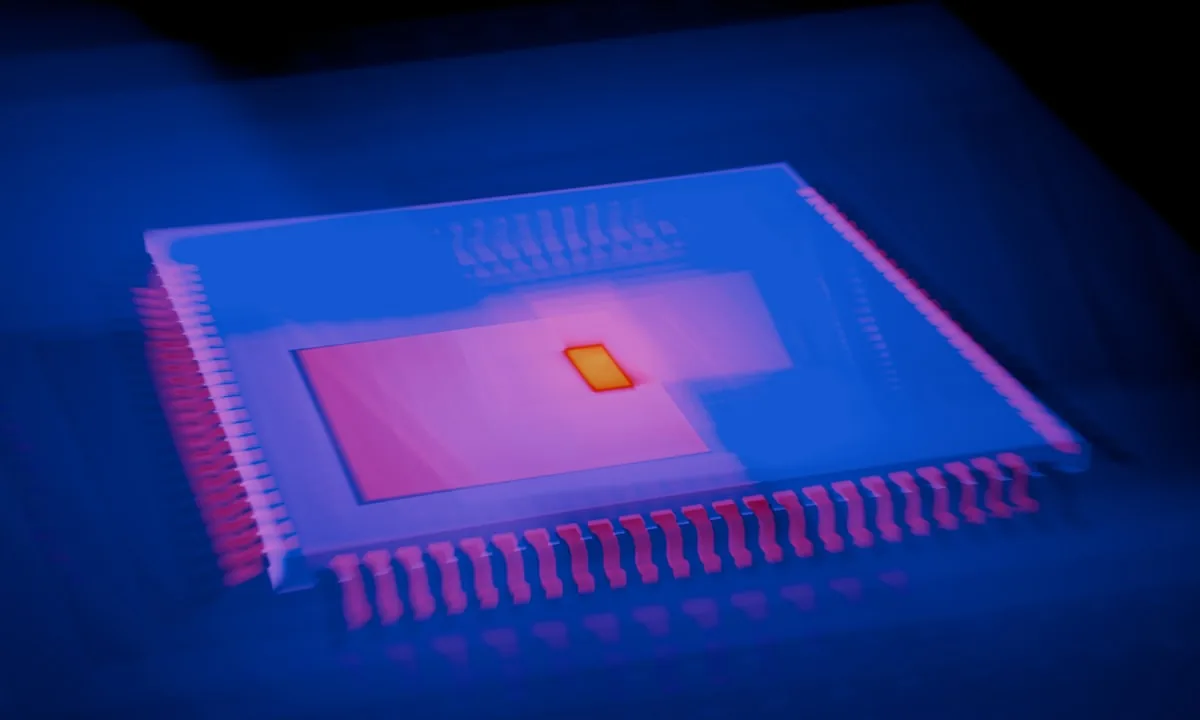
This is where Taalas introduced a disruptive design paradigm. Instead of building generic compute blocks that fetch parameters from DRAM, Taalas designed custom application-specific integrated circuits (ASICs) where the neural network's weights are baked into the physical layout of the transistors themselves.
By hardwiring the weights into silicon, the memory bottleneck disappears entirely. There is no HBM to query, no memory bus to congest, and virtually no data transfer delay. The mathematical operations occur directly inside the wiring of the chip.
Early engineering benchmarks suggest that hardwired AI silicon can achieve 10x to 100x improvements in power efficiency and throughput per dollar compared to state-of-the-art general-purpose GPUs. For companies spending hundreds of millions of dollars on data center power bills, these numbers are impossible to ignore.
The Rigidity Risk: Frozen vs. Fluid Models
While the performance gains are astonishing, etching AI into silicon comes with a massive structural trade-off: complete loss of flexibility.
Fabricating a custom silicon chip takes months and costs millions of dollars in tape-out fees. Once a model is etched into silicon, its parameters are frozen forever. You cannot push a software patch to update its knowledge base, adjust its alignment, or fine-tune its prompt behavior. If a superior architecture emerges three months after chip production, your custom silicon becomes an expensive paperweight.
This creates a sharp strategic divide in how AI infrastructure will evolve:
- Fluid Frontier Models: State-of-the-art LLMs (like GPT-5.6, Claude, or Qwen) that undergo constant fine-tuning and structural updates will remain anchored to general-purpose GPUs and programmable NPUs.
- Immutable Base Utilities: Specialized tasks with standardized architectures—such as audio transcription (
Whisper), vision feature extraction, robotics control loops, and core embedding models—are prime candidates for silicon etching.
The Hardware-Software Horizon
AMD's acquisition of Taalas signals that chip makers no longer view AI compute as a monolithic market. Instead, we are entering an era of deep specialization where hardware and software boundaries blend.
For enterprise tech leaders and developers, the takeaway is clear. We are shifting from an era where software solved every efficiency problem to an era where physical hardware architecture dictates software feasibility. As edge devices like smartphones, smart glasses, and autonomous vehicles demand real-time AI without draining batteries, hardwired intelligence will likely power the invisible background tasks of our daily lives.
Etching intelligence in silicon isn't about replacing GPUs—it's about creating a hyper-efficient baseline so that general compute can focus on pushing the boundaries of frontier intelligence.


Loading comments…