For the past two years, the tech world has been obsessed with "agents"—AI systems that don't just answer questions, but actively use tools, browse the web, and execute complex workflows on our behalf. However, this agentic revolution has come with a significant catch: it has been almost entirely tethered to the cloud. If you wanted a capable agent, you had to route your tasks through proprietary APIs belonging to OpenAI, Anthropic, or Google. This meant dealing with latency, strict rate limits, and most importantly, handing over your sensitive data to external servers.
Enter LM Studio Bionic
But the tide is turning. This week, LM Studio—the wildly popular desktop application for running open-weights language models locally—announced a major leap forward: LM Studio Bionic. Positioned as an "AI agent for open models," Bionic is designed to bring the autonomous, multi-step capabilities of cloud-based agents directly to your local hardware. It is a pivotal moment for the open-source AI community and a massive shift in how we think about agentic workflows.
What exactly is LM Studio Bionic? If you are familiar with LM Studio, you know it as the easiest way to download and run models like Meta's Llama 3 or Mistral directly on your Mac or PC. Until now, the interaction was mostly conversational. Bionic changes the paradigm by introducing a local agentic framework. It equips these locally running models with the ability to call tools, interact with your local file system, and execute multi-step plans without ever sending a single byte of data over the internet. You are no longer just chatting with a model; you are deploying an autonomous worker that lives entirely on your hard drive.
The Three Pillars of Local Agents
Why is this shift to local agents so critical? From an engineering and product perspective, there are three massive advantages that Bionic unlocks for developers and power users alike.
First and foremost is the absolute guarantee of privacy and data security. In the enterprise world, context is everything. For an AI agent to be truly useful, it needs access to your proprietary codebases, internal financial documents, or personal emails. Sending this highly sensitive information to a third-party cloud API is often a non-starter for security-conscious organizations. With Bionic, the agent operates within the secure perimeter of your own machine. The model reads your local files, processes the data in your VRAM, and outputs the result locally. This zero-leakage environment is the holy grail for corporate AI adoption.
Second is the economic reality of the "agentic loop." As we have discussed previously when looking at the staggering token costs of autonomous coding agents, AI agents are incredibly noisy. They think out loud, they make mistakes, they retry tool calls, and they recursively summarize their own context. In a cloud environment, you pay for every single one of those tokens. A runaway agent can quickly rack up a massive bill. Local inference fundamentally changes this equation. When you run an agent on your own GPU, the marginal cost of a token drops to effectively zero—you only pay for the electricity powering your machine. This encourages developers to experiment with deeply complex, long-running agentic loops without the looming fear of bankruptcy.
Third is the reality of offline autonomy. We live in a world that assumes ubiquitous connectivity, but there are countless scenarios where internet access is restricted, unreliable, or intentionally disabled for security reasons. A local agent powered by Bionic can continue to refactor code, analyze local datasets, or orchestrate system tasks while you are on a long flight or working in an air-gapped environment. Imagine pointing an agent at a folder full of chaotic, unorganized PDF reports and asking it to extract the key metrics into a neatly formatted CSV file. Doing this via a cloud API requires uploading gigabytes of data. Doing it locally with Bionic is just a matter of compute time, operating entirely offline and securely on your own hardware.
The Hardware Reality Check
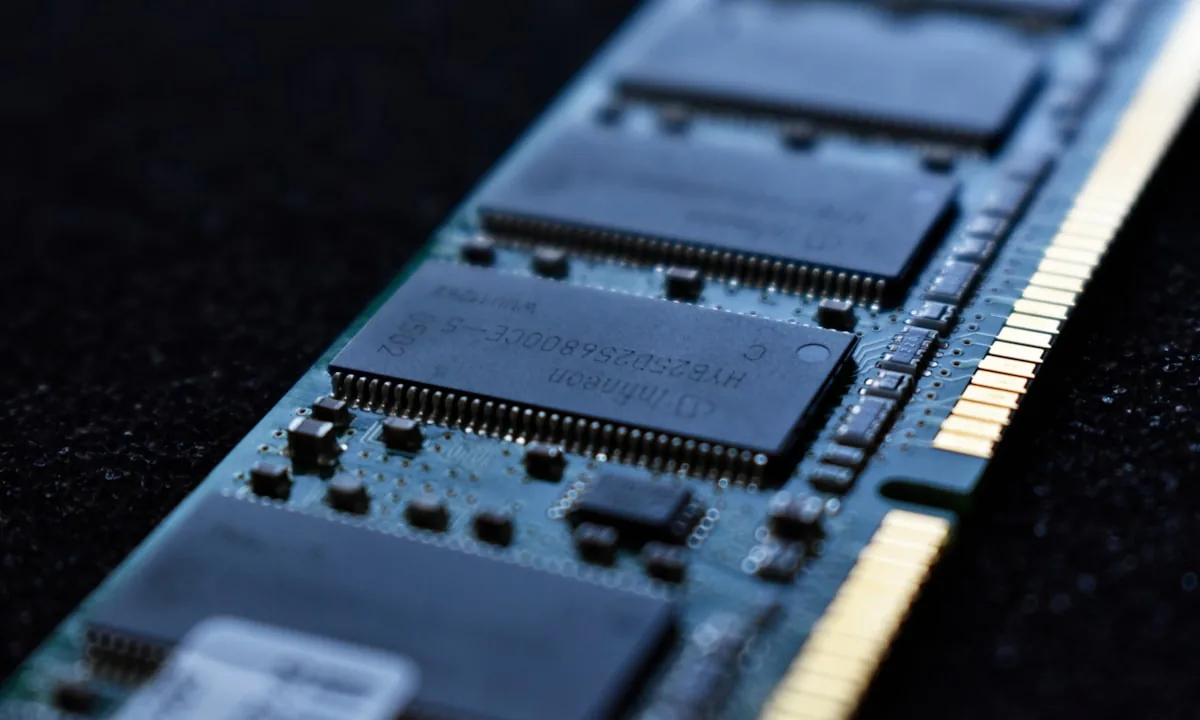
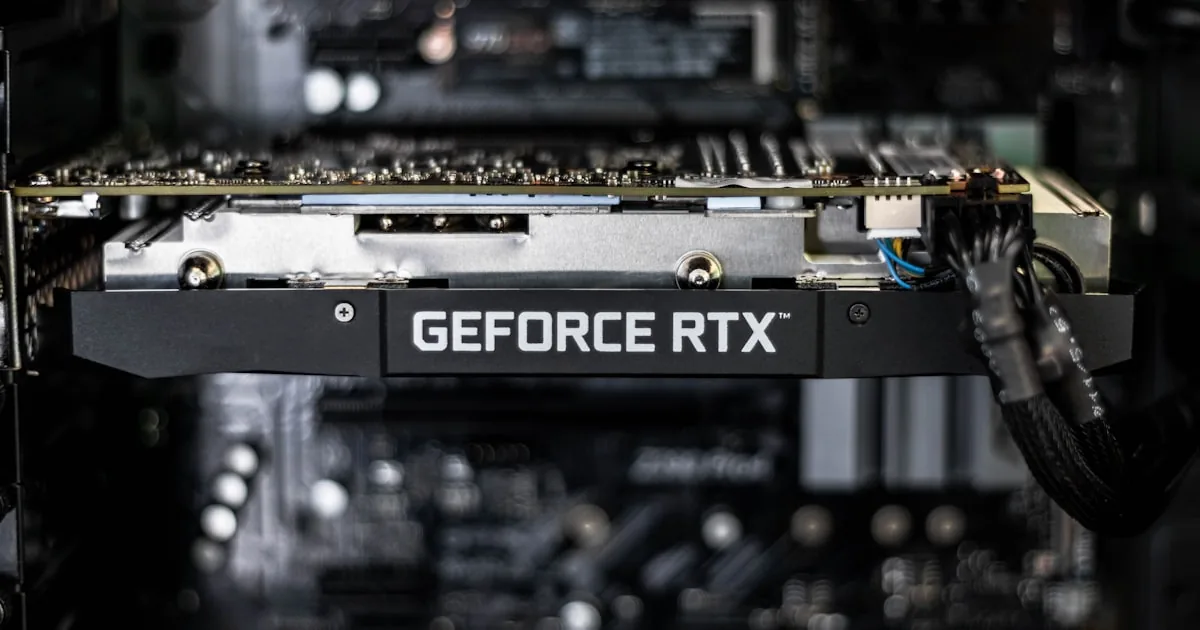
However, the local agent dream is not without its harsh realities. The primary bottleneck is hardware, specifically Video RAM (VRAM). Agentic workflows—where the model must decide when to use a tool, how to format the request, and how to interpret the result—require models with robust reasoning and reliable instruction-following capabilities. While fine-tuned 8-billion-parameter models are rapidly improving at outputting structured JSON, the true heavy lifting often requires larger models like a 70B parameter variant. Running these larger models comfortably requires significant memory. You often need high-end Apple Silicon Macs with unified memory architectures, or desktop rigs equipped with top-tier GPUs. If you attempt to run Bionic with a tiny, heavily quantized model on a standard ultra-portable laptop, the agent is likely to hallucinate tool calls, misunderstand the context, or get trapped in endless logic loops.
Furthermore, we must consider the broader trend of "Frugal AI." Developers are increasingly realizing that not every task requires the massive intellectual firepower of the most expensive frontier models. Why use a multi-trillion parameter model to simply rename files based on their contents or to parse a local log file for error codes? LM Studio Bionic leans heavily into this pragmatic approach. By matching the size of the open model to the complexity of the task, developers can create highly optimized, purpose-built agents that run efficiently on edge devices.
A Hybrid Future
Despite the current hardware constraints for the most advanced models, the launch of LM Studio Bionic represents a crucial milestone in the evolution of personal computing. It proves that the future of AI isn't exclusively about centralized megamodels housed in multi-billion-dollar data centers. The future is hybrid and deeply personalized. We will continue to use massive cloud APIs for tasks requiring deep, generalized intelligence or immense factual knowledge, but we will increasingly rely on local, private agents for our daily, highly-contextual workflows. As open-weights models become more capable at smaller scales, and consumer hardware continues to expand its memory capacity, local agents will soon become as standard and indispensable as the operating system itself. LM Studio Bionic is simply giving us an early, powerful glimpse into that inevitable, agentic future.


Loading comments…