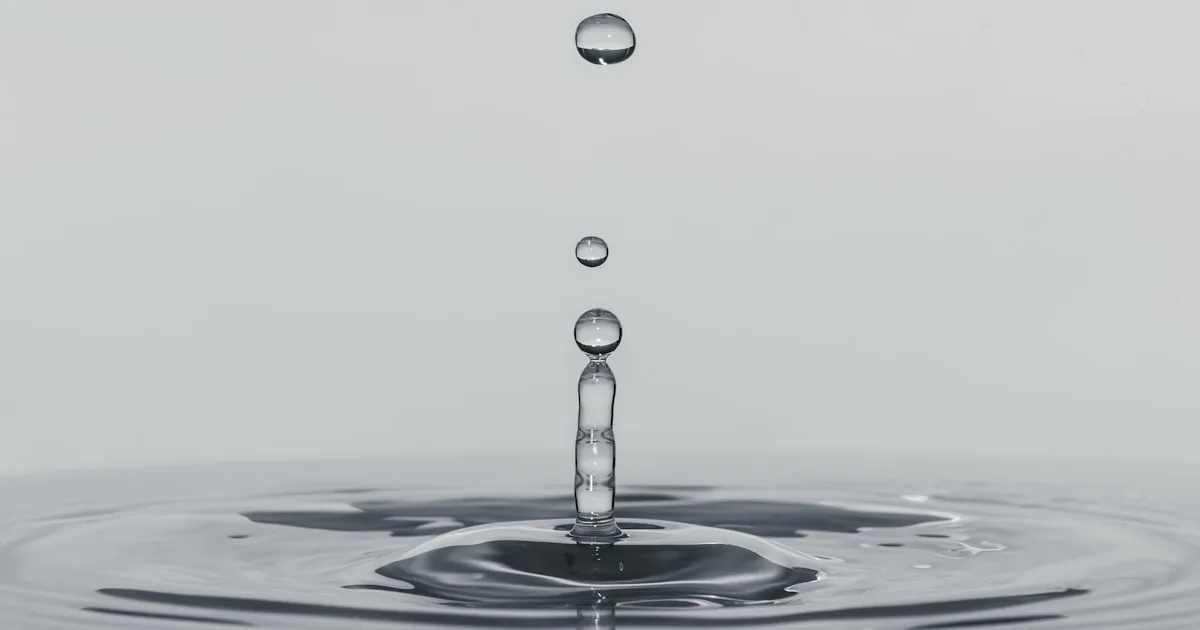
Imagine a tiny drop of glass so ridiculously tough that it can shatter a speeding hydraulic press or flatten a bullet upon impact. Yet, if you so much as pinch its delicate, hairline tail with a pair of pliers, the entire object violently disintegrates into fine powder in microseconds.
A 17th-Century Curiosity
Drop a blob of red-hot molten glass into a bucket of cold water, and physics crafts one of its most mesmerizing paradoxes: Prince Rupert's drop. Named after Prince Rupert of the Rhine who brought these curious glass teardrops to King Charles II in the 1660s, this object has baffled scientists and fascinated spectators for centuries.
At first glance, it looks like a tadpole made of clear glass, with a thick bulbous head tapering into a long, thin tail. But its mechanical behavior seems to defy common sense. Hit the head with a heavy hammer, and the hammer bounces off without leaving a scratch. Shoot it with a rifle bullet, and the bullet shatters on contact while the glass remains intact. However, snip the tip of its tail, and a shockwave travels through the structure, causing the entire teardrop to explode into microscopic dust.
The Microscopic Tug-of-War Inside
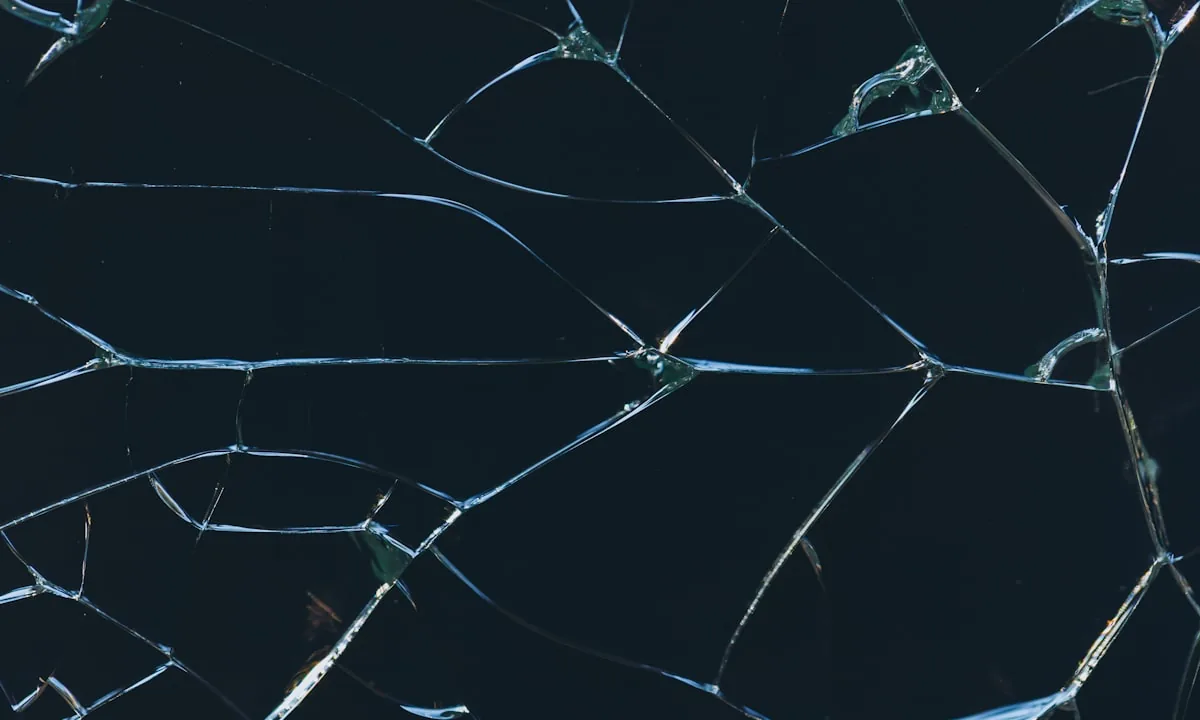
To understand how a single piece of glass can be simultaneously indestructible and ultra-fragile, we need to look at what happens during its dramatic birth in cold water.
When molten glass at over 1,000 degrees Celsius drops into water, its outer layer cools down almost instantly. As hot glass cools, it wants to shrink. Because the liquid exterior freezes into a solid shell within a fraction of a second, it locks in its volume. Meanwhile, the interior core remains blistering hot and liquid.
As that molten core gradually cools down inside the rigid outer shell, it also attempts to shrink. But it is bonded to the already solid exterior. As the core pulls inward on the outer shell, it creates a massive invisible tug-of-war. The outer surface is placed under extreme compressive stress—pushed inward with pressures exceeding 700 megapascals (over 100,000 pounds per square inch). Conversely, the interior core is trapped in high tensile stress, stretched outward in every direction.
Think of it like a medieval stone arch bridge. The stones in an arch are squeezed tightly together, making the bridge capable of supporting immense weight from above. In Prince Rupert's drop, the outer layer acts as millions of tiny arches pressing against each other. For a crack to form on the surface, an external force must first overcome this enormous compressive pressure. That is why a hammer blow or bullet impact simply cannot break the head: the force isn't strong enough to open a surface crack.
The Explosive Chain Reaction
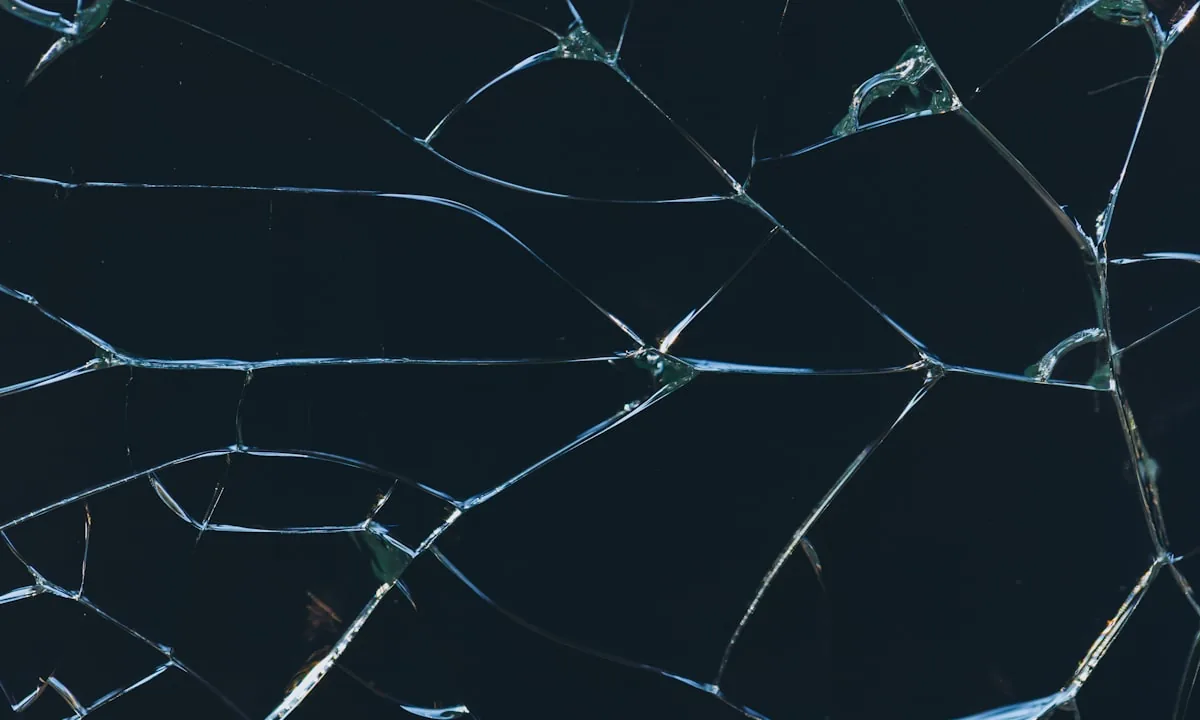
If the head is practically armor-plated, why does touching the tail destroy the whole thing?
The tail is thin, meaning it cooled much more uniformly than the bulbous head. Consequently, the protective layer of compressive stress at the tail is extremely thin. When you snip the tail, you easily penetrate that thin outer layer and expose the inner region, which is under intense tensile stress.
The moment a crack enters the tensile zone, the delicately balanced stress field collapses. The stored elastic strain energy is released all at once. A crack front races through the glass toward the head at speeds exceeding 1.5 kilometers per second (over 5,000 km/h or Mach 4.5).
As the primary crack propagates, it repeatedly bifurcates—splitting into secondary and tertiary cracks. Within microseconds, a dense network of fractures disintegrates the entire body of glass. What was a solid object moments ago becomes a cloud of glass dust, driven by the violent release of internal tension.
From Royal Curiosity to Modern Tech
While Prince Rupert's drops began as a parlor trick for 17th-century royals, the underlying physics paved the way for modern materials engineering.
Today, engineers use controlled thermal stress to create tempered glass—the safety glass found in automobile side windows, architectural facades, and smartphone screens like Gorilla Glass. By rapidly cooling the surfaces of heated glass sheets with cold air jets, manufacturers create a hard compressive outer layer while maintaining interior tension. When tempered glass breaks, it doesn't shatter into dangerous sharp shards; instead, it crumbles into small, relatively harmless granular pieces, just like a Prince Rupert's drop.
The Beauty of Hidden Forces
Prince Rupert's drop is a vivid reminder that the physical world is often governed by invisible, opposing forces held in delicate equilibrium. What appears to be a simple, uniform piece of glass is actually a vessel of trapped energy, waiting for the slightest disturbance to release its force.
Nature is full of these hidden balances—from the tension in a droplet of morning dew to the stress inside tectonic plates. The next time you hold your smartphone or look through a car window, remember the fiery liquid teardrop that taught us how to turn glass's greatest weakness into its ultimate strength.


Loading comments…