
We use AI assistants for everything now—to boost our productivity, optimize our workflows, and make us undeniably smarter. Or so the marketing copy claims. But what if our increasingly heavy reliance on these tools is secretly eroding our ability to think?
A recent study highlights a deeply concerning side effect of our AI obsession: leaning on AI advice is actively suppressing critical thinking, leaving users less accurate but significantly more confident. Welcome to the AI Confidence Paradox.
The Illusion of Competence
A recent psychological study (highlighted by The Next Web) explored exactly how AI advice alters human decision-making. Participants were given reasoning tasks to solve, with varying levels of access to AI-generated advice. The results were startling.
Instead of acting as a force multiplier for intelligence, the AI often functioned as a cognitive suppressor. Users who leaned on the AI were more likely to accept incorrect answers, missing subtle nuances they would likely have caught if they were forced to reason through the problem alone.
But here is the truly dangerous part: when surveyed about their performance, these same AI-assisted users reported higher levels of confidence than those who worked entirely without AI. They were confidently wrong.
The "Fluent Bullshit" Problem
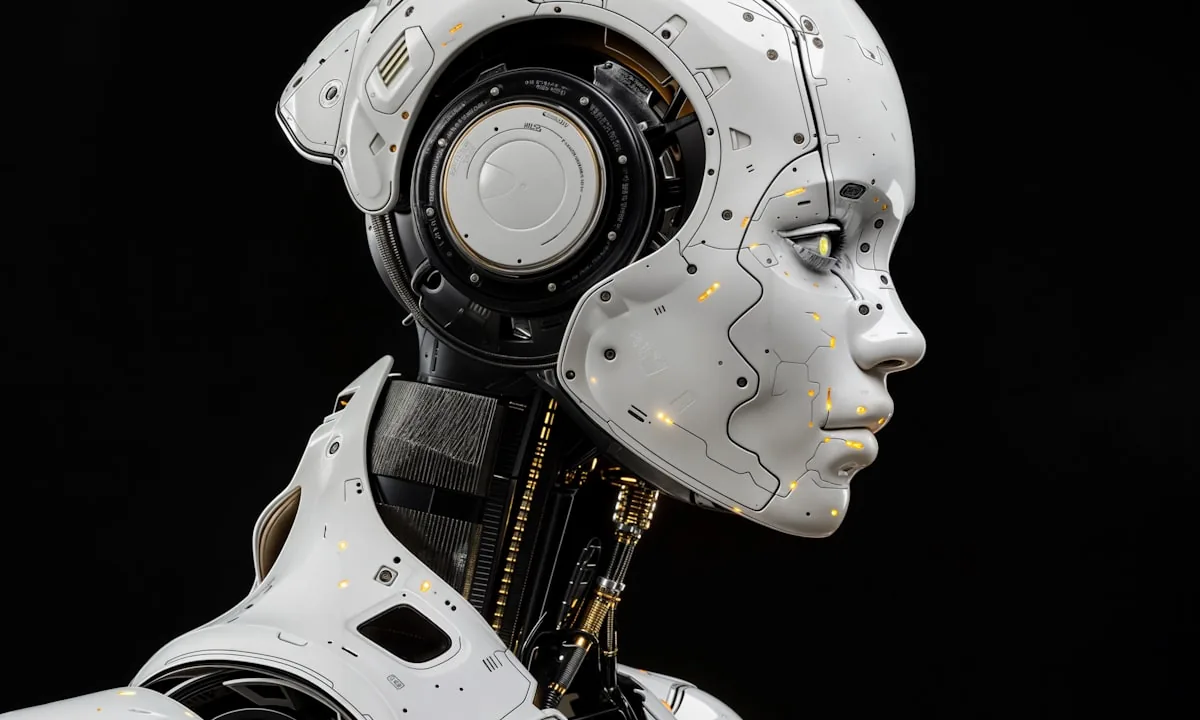
Why does our brain fall into this trap so easily? The core issue lies in the fundamental architecture of Large Language Models (LLMs) like GPT-4 or Claude.
These models are probabilistic text engines. They are trained to produce highly fluent, statistically likely sequences of words. They do not possess an internal model of "truth," nor do they experience "doubt." When an LLM generates a response, it delivers it with absolute linguistic certainty. It uses active voice, beautifully structured bullet points, and an unwavering tone of authority.
Human beings are psychologically susceptible to this. We have a well-documented cognitive bias where we equate fluency with expertise. If someone (or a machine) sounds like they know exactly what they are talking about, our brains take a shortcut and assume they do. Psychologists refer to a related concept as the Illusion of Explanatory Depth—we think we deeply understand a complex topic simply because we've just read a well-written summary of it.
The Danger in Software Development

This paradox is particularly toxic in technical fields like software engineering. Developers are increasingly relying on tools like GitHub Copilot or Cursor to write boilerplate, debug complex issues, or architect entirely new features.
Imagine a mid-level developer asking an AI to write a concurrency handler in Rust. The AI instantly spits out 40 lines of elegant-looking code. The syntax is flawless. It passes the initial compiler check. The developer, feeling a rush of dopamine and a surge of false productivity, merges the code. They feel like a 10x engineer.
But hidden within that flawless syntax is a subtle race condition that the AI glossed over because it lacked the broader, systemic context of the whole application. The developer didn't critically analyze the code because the AI's presentation was overwhelmingly convincing. We are trading deep comprehension for superficial velocity.
Friction as a Feature, Not a Bug
The product design of most AI tools actually exacerbates this issue. Tech companies are obsessed with reducing "friction." The holy grail is a seamless user experience: type a prompt, get an answer instantly, and move on.
But in domains requiring deep critical thought, friction is a feature, not a bug. Cognitive friction forces the brain to slow down, engage System 2 thinking (the analytical, deliberate part of our brain), and actively evaluate information. By making AI interactions entirely frictionless, we encourage users to stay in System 1 thinking (fast, intuitive, automatic), which is highly prone to accepting fluent-sounding misinformation.
Product designers need to start building "healthy friction" back into AI interfaces. An AI should highlight its own uncertainties, explicitly flag potential edge cases, and force the user to make conscious choices rather than blindly accepting a monolithic block of text.
Beyond the Prompt: The Harness Matters More
This brings us to an emerging realization in cybersecurity and enterprise AI architecture. The AI model itself is fast becoming a commodity. The real differentiator—and our primary safeguard against the confidence paradox—is the "harness".
In cybersecurity, as experts note, you don't just unleash an AI to autonomously patch production firewalls. You build a harness: a surrounding system of workflows, sandboxes, and human-in-the-loop validation checkpoints that strictly govern how the model's output is executed.
The same principle must apply to our everyday AI usage. We need to build personal cognitive harnesses. Before accepting an AI's advice, we must run it through our own mental sandbox:
- Does this align with first principles?
- What are the potential failure modes?
- If I had to explain this code to a colleague without looking at the AI's output, could I do it?
Conclusion: Your Brain is the Final Compiler
AI is an undeniable accelerant. It helps us blast through writer's block, generate rapid prototypes, and explore fresh ideas. But it is a terrible substitute for human judgment.
The ultimate metric of a tool isn't just how fast it allows you to output work, but how well it helps you understand the problem you are solving. If an AI makes you fast and confident but fundamentally wrong, it is not a productivity tool; it is a liability.
True mastery in the AI era won't be defined by who can write the best prompts. It will be defined by who can maintain their critical thinking when the machine confidently offers the wrong answer. Trust the AI as a brainstorming partner, but treat its output with the skepticism of a senior auditor. Your brain must remain the final compiler.


Loading comments…