
Listening is a lost art in our noisy, fast-paced world. By learning to truly hear others, we cultivate a deeper presence, enrich our relationships, and discover a profound sense of inner quiet.
When was the last time you felt truly heard? Not just acknowledged with a polite nod or a brief "I see," but deeply and fundamentally understood? When was the last time you felt as though the physical space between you and another person had momentarily dissolved, replaced by a bridge of pure, undivided attention?
In our modern era, we are constantly communicating, yet we are rarely listening. We live in a society saturated with noise, where everyone is relentlessly broadcasting their thoughts, their achievements, and their anxieties, but very few are genuinely tuning in to receive what others are sending. The art of listening has slowly eroded, replaced by the habit of merely waiting for our turn to speak.
The Illusion of Conversation
Observe a typical conversation today. Often, it is not a mutual exchange of ideas, but rather a sequence of overlapping monologues. While the other person is speaking, our minds are rarely still. We are busy formulating our next response, judging the validity of their words, or relating their experience back to our own. "Oh, that happened to me too," we interject, instantly hijacking the narrative.
We do this not out of malice, but out of a deeply ingrained restlessness. The human mind is like a turbulent sea, perpetually churning with thoughts, memories, and desires. To truly listen requires us to calm this internal storm, to suspend our own ego and set aside our pressing need to be validated or understood. It demands a radical act of self-effacement: for a few fleeting minutes, we must accept that the universe does not revolve around us.
The Stoic Geometry of Hearing
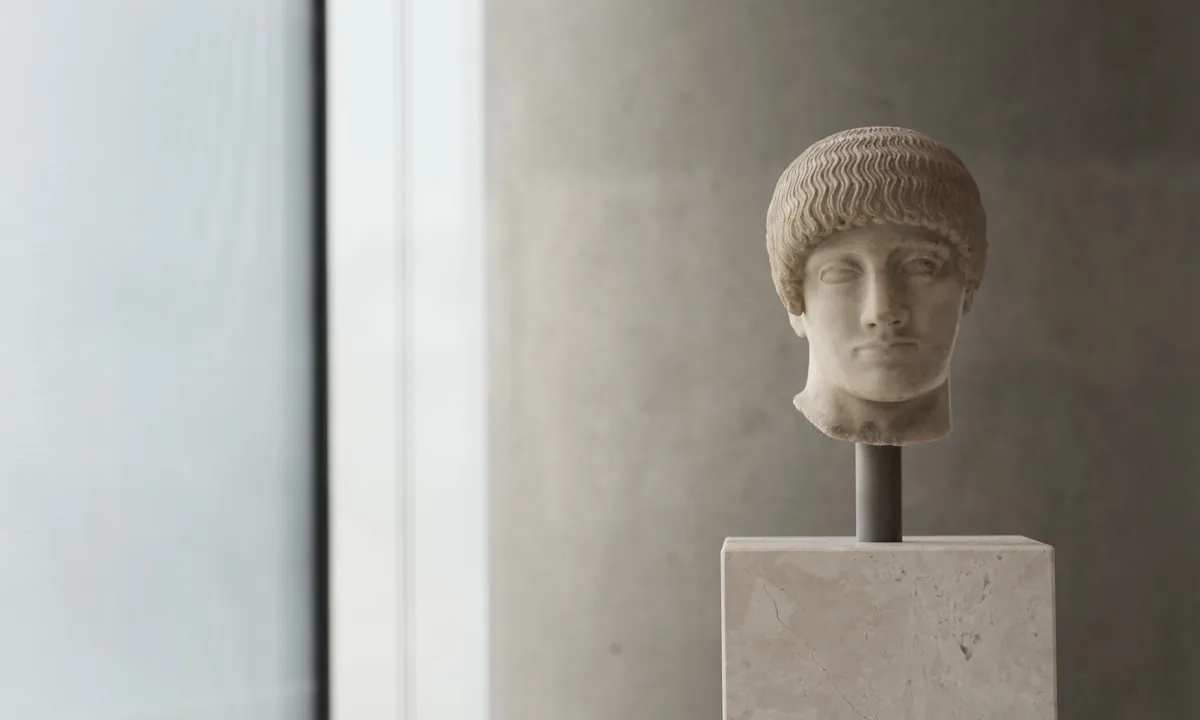
The ancient philosophers understood the moral and practical weight of listening. Zeno of Citium, the founding thinker of the Stoic school of philosophy, famously observed a fundamental truth embedded in our very anatomy: "We have two ears and one mouth, so we should listen more than we say."
For the Stoics, listening was not merely a social courtesy; it was an essential discipline of self-mastery and wisdom. To speak is to repeat what you already know, but to listen is to expose yourself to the possibility of learning something new. The Stoic practice of Prosochē, or mindful attention, requires an individual to be acutely present in the current moment. When we apply Prosochē to our conversations, we train ourselves to absorb reality exactly as it presents itself, without the immediate distortion of our own biases and judgments.
Listening, in the Stoic sense, is an exercise in humility. It is the active recognition of the limits of our own perspective. By keeping our mouths closed and our ears open, we allow the world to reveal its complex truths to us, rather than constantly trying to impose our own narrative onto the world.
The Empty Vessel

Eastern philosophy offers a similarly profound metaphor for the act of listening: the empty cup. A well-known Zen Buddhist parable tells the story of a learned scholar who visits a Zen master to inquire about Zen. As the master serves tea, he pours until the scholar's cup is full, and then keeps pouring. The tea overflows onto the table. When the frantic scholar points out that the cup is full and can hold no more, the master replies, "Like this cup, you are full of your own opinions and speculations. How can I show you Zen unless you first empty your cup?"
To listen deeply, we must become the empty vessel. If we enter a conversation overflowing with our own preconceived notions, assumptions, and defensive counter-arguments, there is simply no physical or mental room to receive the other person's truth. True listening is an act of internal spaciousness. It is the willingness to let go of our certainties and invite the unknown. When we empty our minds, we create a sanctuary for the speaker's words to land, to resonate, and to be held with reverence.
Deep Listening as an Act of Love
Beyond the pursuit of wisdom, listening is perhaps the most profound expression of empathy we can offer another human being. The contemporary Zen master Thich Nhat Hanh often taught the practice of "deep listening." He described it as a specific kind of listening that has only one purpose: to help the other person empty their heart and relieve their suffering.
When someone is in pain, our instinct is often to offer solutions, to give advice, or to try and fix the problem. But more often than not, the other person does not need a mechanic to fix their life; they need a witness to their experience. Deep listening is the act of bearing witness. It is saying, through our silent and unwavering attention, "I am here with you. I see your pain, and your reality matters to me."
This kind of listening acts as a powerful medicine. When a person feels truly heard, a subtle alchemy takes place. The heavy burden they have been carrying suddenly becomes lighter, shared across the invisible bridge of human connection.
Cultivating the Quiet
How, then, do we reclaim this lost art in our daily lives? It begins with a single, conscious choice. The next time you find yourself in a conversation, treat it as an opportunity for practice.
Notice the urge to interrupt, and gently let it pass. Notice the impulse to formulate your response while the other person is still speaking, and gently bring your attention back to the cadence of their voice. Look at their eyes. Pay attention to the silence between their words.
Do not try to be interesting; try to be interested. Become the quiet, reflective surface of a still lake, allowing the other person's reality to mirror itself upon you without distortion. In the end, the greatest gift you can give another person is not your brilliant advice or your captivating stories. The greatest gift you can give is the pristine, undistracted gift of your attention.


Loading comments…