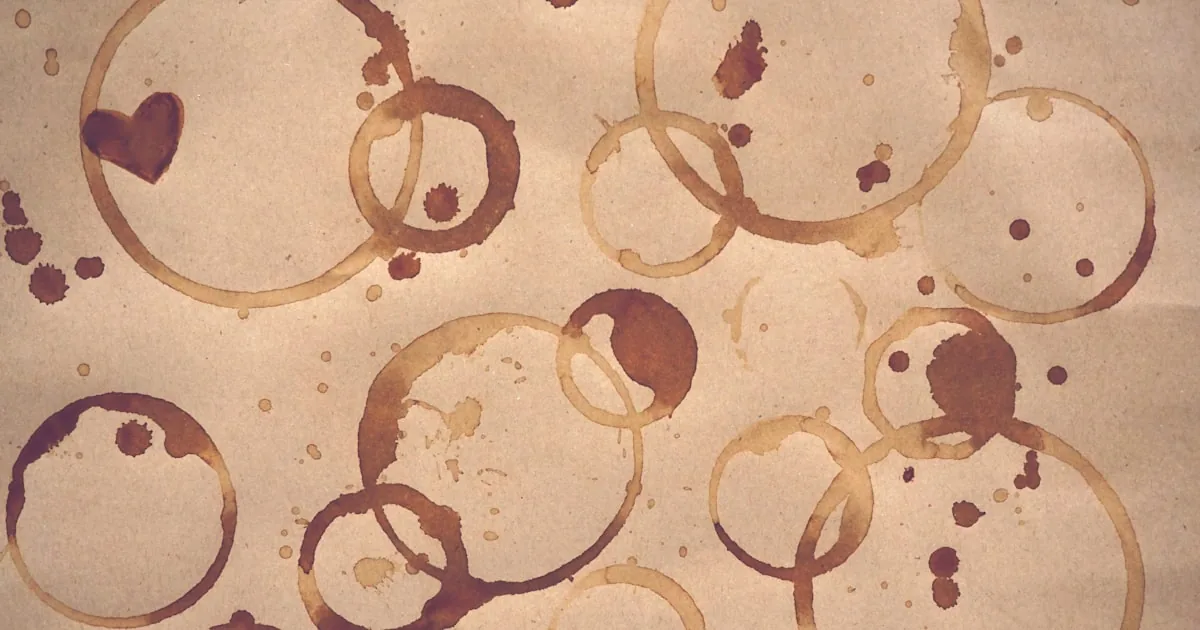
Ever spilled a drop of coffee on your kitchen counter and noticed how it dries? Instead of leaving a uniform brown spot, it leaves a dark, concentrated outer ring surrounding a surprisingly pale center.
This everyday mystery is known in physics as the Coffee Ring Effect, and beneath its humble surface lies a fascinating story of micro-hydrodynamics, surface tension, and invisible liquid highways. What looks like a static puddle is actually a dynamic battleground where millions of suspended particles are driven toward the edge in a race against evaporation.
The Pinned Perimeter: A Droplet's Anchor
To understand why liquid behaves this way, we first need to look at how a drop of coffee rests on a surface. When coffee lands on your desk, it forms a dome shaped by surface tension. The outer boundary where the liquid meets the solid table is called the contact line.
As the liquid begins to evaporate, you might expect this contact line to shrink inward like a deflating balloon. However, desk surfaces are not atomically smooth. Tiny microscopic rough patches and chemical irregularities act like anchor points, trapping the edge of the droplet in place. Physicists call this phenomenon contact line pinning.
Because the edge is anchored firmly in place, the droplet cannot shrink in diameter as water evaporates. Instead, it is forced to flatten while keeping its footprint exactly the same size. And that single constraint sets off a remarkable cascade of physics.
The Liquid Highway: Capillary Flow in Action
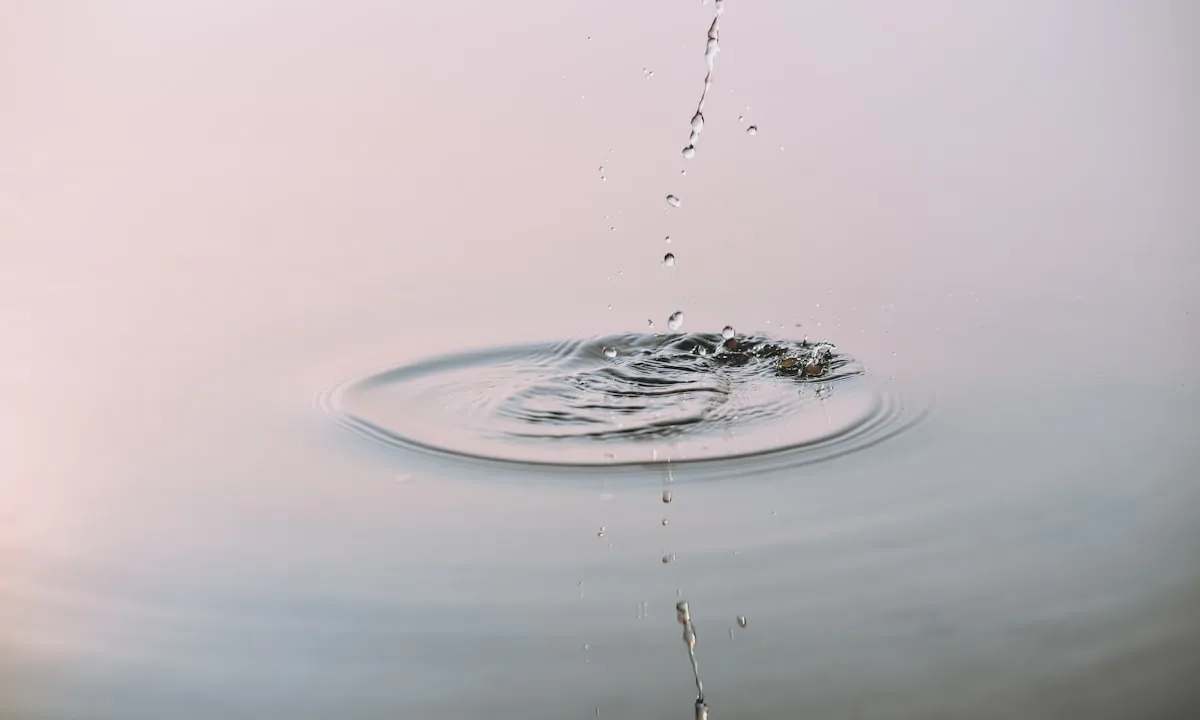
Once the droplet's edge is pinned, a severe evaporation imbalance takes place. The liquid at the thin outer rim evaporates much faster than the thicker liquid sitting in the center dome, simply because the edge has a higher surface-area-to-volume ratio exposed to the surrounding air.
Here is where the magic happens. Because the pinned edge is losing water at a rapid pace, the droplet must maintain its physical structure. Water from the center dome is drawn outward toward the perimeter to replace the evaporated liquid.
Think of it as an invisible, self-propelling liquid conveyor belt. Suspended inside your coffee are tiny solid particles—ground coffee solids, oils, and pigments. As water surges from the center toward the pinned rim, it carries all these suspended particles right along with it.
Scientists refer to this outward surge as capillary flow. The fluid moves continuously outward, sweeping microscopic coffee grounds toward the edge throughout the entire drying process.
The Border Traffic Jam
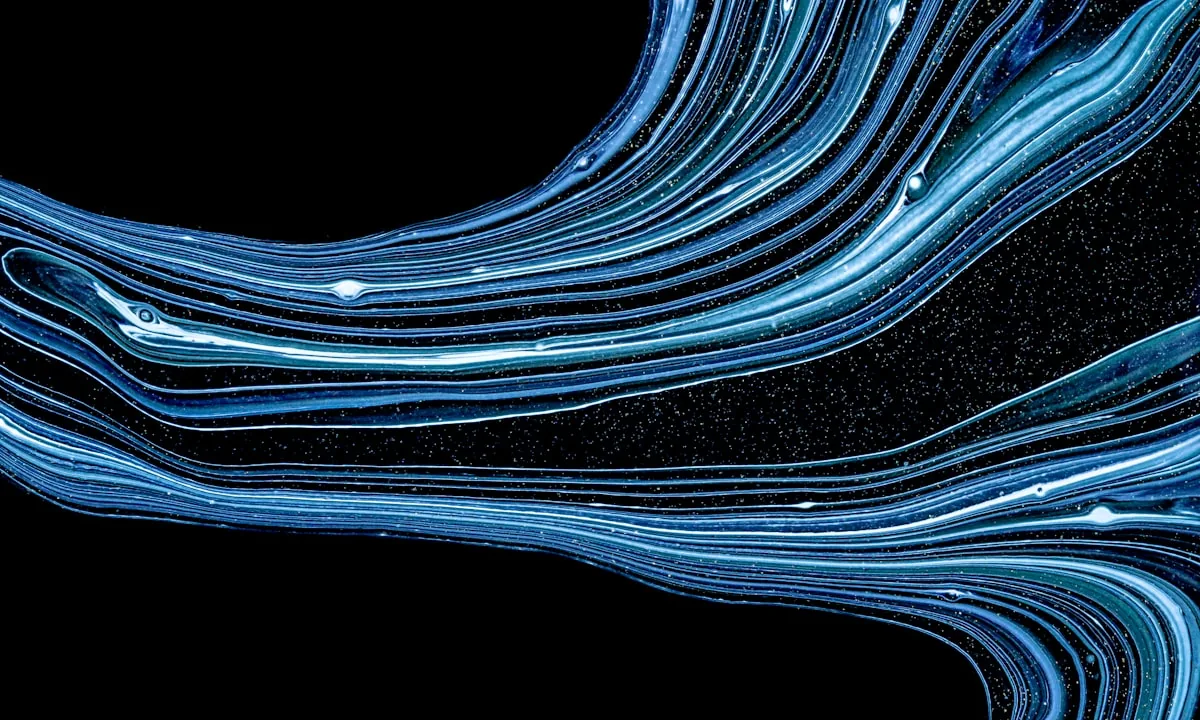
What happens when those coffee particles reach the perimeter? The water molecules carrying them evaporate directly into the surrounding atmosphere, leaving the solid particles stranded. With nowhere else to go, the particles pile up against the pinned boundary.
Minute by minute, millions of coffee solids aggregate along the circular border. By the time the last drop of water disappears from the middle, nearly all the suspended matter has been delivered to the edges. The center is left nearly empty, while the perimeter is packed dense with pigment.
The result is the classic ring stain: a dark, defined border holding an almost translucent center.
From Breakfast Tables to High-Tech Innovation
While the Coffee Ring Effect might seem like a quirky kitchen observation, understanding it has proved crucial for modern technology. For decades, industrial engineers faced a major headache: how do you spray ink, paint, or electronic coatings without them drying into ugly, uneven rings?
In high-precision manufacturing—such as printing flexible solar panels, fabricating circuit boards, or depositing DNA microarrays in biomedical labs—uneven drying can ruin a product entirely.
By studying the micro-physics of coffee drops, researchers discovered clever ways to defeat the effect. Adding specific molecules called surfactants can create an internal recirculating current (known as Marangoni flow) that pulls particles back to the center. Alternatively, replacing round particles with elongated, ellipsoid-shaped particles causes them to clump together early, locking them in place before they reach the edge.
Science in the Smallest Moments
It is easy to assume that profound physics only happens in particle colliders or deep space observatories. Yet, right here on your kitchen counter, a simple spill demonstrates fluid dynamics, thermodynamic evaporation, and microscopic transport phenomena all working in harmony.
The next time you knock over your coffee cup, do not just reach for a paper towel immediately. Take five seconds to look closely at the edge of the puddle. You are looking at an invisible highway system operating at the scale of micrometers, turning an accidental spill into a masterclass in natural physics.


Loading comments…