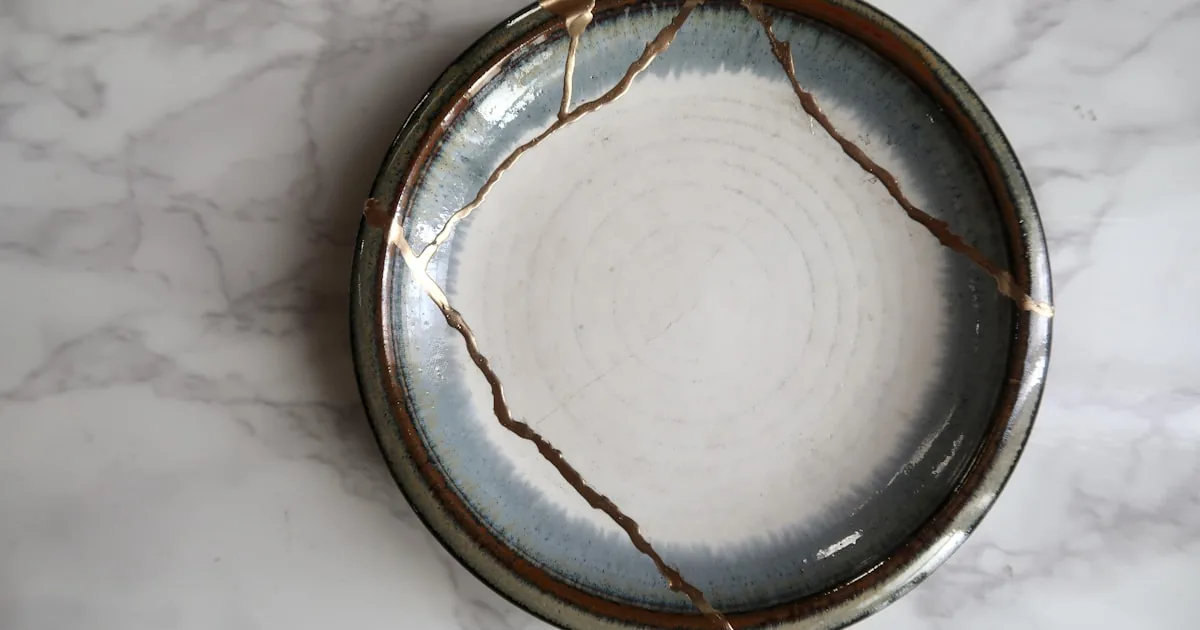
What if our deepest fractures are not failures to be hidden, but the precise places where wisdom and beauty enter? In a world obsessed with flawless surfaces, we often spend immense energy concealing our scars and pretending we were never broken.
Yet human existence is inherently fragile. Heartbreaks, failures, losses, and disillusionments leave unmistakable marks upon our character. How we respond to these fractures determines whether we spend our lives in quiet shame or step into a richer, more resilient form of being.
The Modern Illusion of Seamlessness
We live in a culture that idolizes the pristine. From smooth smartphone screens to carefully curated digital identities, we are constantly encouraged to present a polished facade to the world. We smooth out our grief, edit away our mistakes, and hide our vulnerability behind armor of efficiency and success.
When something breaks in our lives—a relationship, a project, a long-held belief—our initial impulse is often panic or concealment. We try to sweep the shattered pieces under the rug or replace them instantly with something new. We treat pain as a technical glitch rather than an essential phase of human evolution.
Philosopher Friedrich Nietzsche famously observed in Thus Spoke Zarathustra that one must have chaos within oneself to give birth to a dancing star. Disruption is not the enemy of growth; it is its prerequisite. When we deny our brokenness, we cut ourselves off from the very experience that deepens our empathy and shapes our true character.
The Heritage of Golden Repair
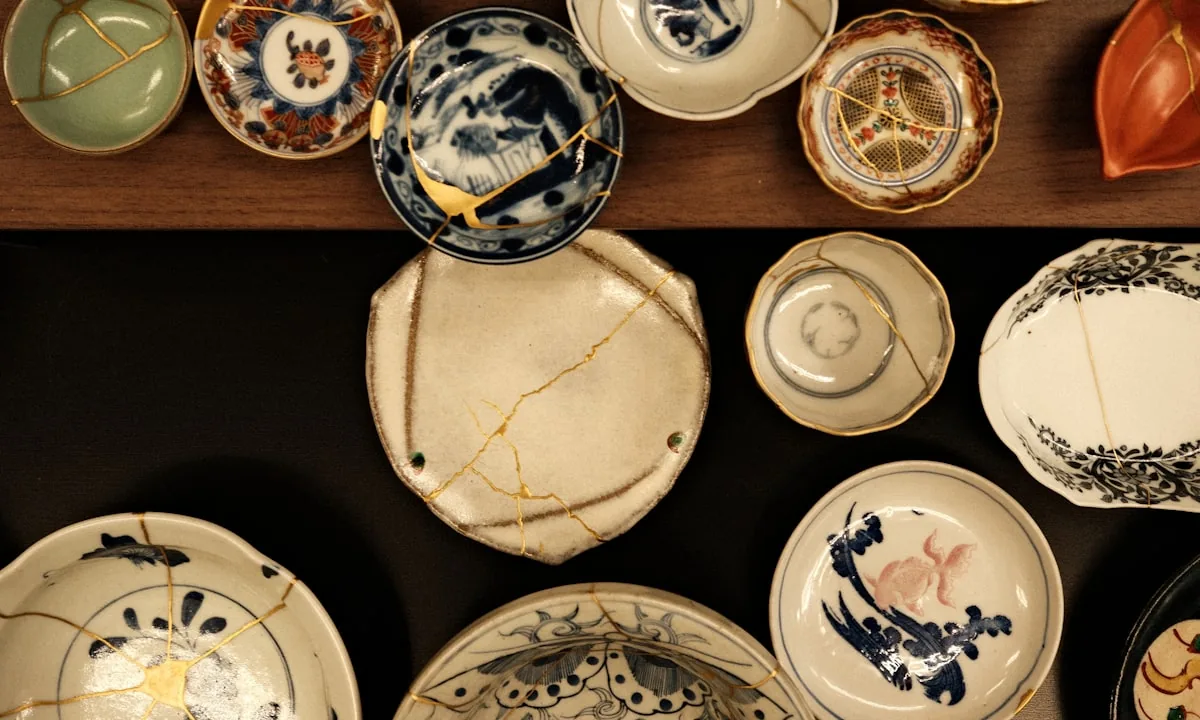
Centuries ago in fifteenth-century Japan, a philosophical aesthetic emerged that offered a radically different perspective on damaged objects. According to legend, when the shogun Ashikaga Yoshimasa sent a damaged Chinese tea bowl back to China for repairs, it returned mended with unsightly metal staples. Seeking a more graceful solution, Japanese craftsmen developed Kintsugi—literally "golden joinery."
Instead of disguising the damage, artisan potters mended the cracks using natural lacquer dusted with powdered gold, silver, or platinum. The result was a vessel where the fractures were not hidden, but illuminated. The repaired object became more valuable and visually captivating than it was when perfectly whole.
Kintsugi is rooted in the philosophy of Wabi-Sabi, which finds beauty in transience, asymmetry, and imperfection. As the tea master Sen no Rikyu taught, true beauty lies not in ideal symmetry, but in the authentic trace of time and experience. The bowl does not hide its story; it wears its history with dignity.
Scars as Sacred Geography
When translated into the realm of human experience, Kintsugi becomes a profound metaphor for emotional healing. To live with a Kintsugi mindset is to recognize that our wounds do not diminish our worth—they transform it.
Consider the nature of physical scar tissue. When skin heals after an injury, the new tissue is stronger and more resilient than what existed before. The same holds true for psychological fractures. The individual who has navigated deep sorrow or profound failure develops a capacity for compassion and insight that cannot be acquired in an untroubled life.
In his classic novel A Farewell to Arms, Ernest Hemingway wrote that "the world breaks everyone, and afterward, many are strong at the broken places." The gold in our personal story is not the avoidance of pain, but the awareness, grace, and understanding with which we piece ourselves back together.
Living the Kintsugi Way
How do we practice golden repair in our daily lives?
First, we must abandon the exhausting demand for perfection. Perfection is a static, lifeless ideal. Growth, by contrast, is dynamic, messy, and organic. Accepting our limitations allows us to stop striving for an artificial standard and start honoring our genuine journey.
Second, we can change how we treat our past mistakes. Rather than viewing a failed venture or a broken bond as a wasted chapter, we can ask: What gold can I pour into this crack? What lesson, patience, or self-compassion can emerge from this experience?
Finally, Kintsugi calls us to show our mended seams to others. When we are brave enough to share our vulnerabilities, we grant permission for those around us to drop their masks as well. Our open scars become bridges of authentic human connection.
The Illuminated Vessel
Look at your life not as a fragile glass ornament that must remain untouched, but as a prized ceramic vessel. It may have fallen; it may have cracked under pressure. But those breaks do not spell the end of your story.
When we honor our fractures and mend them with intention and care, we discover that brokenness is not the opposite of beauty—it is often the beginning of it.


Loading comments…