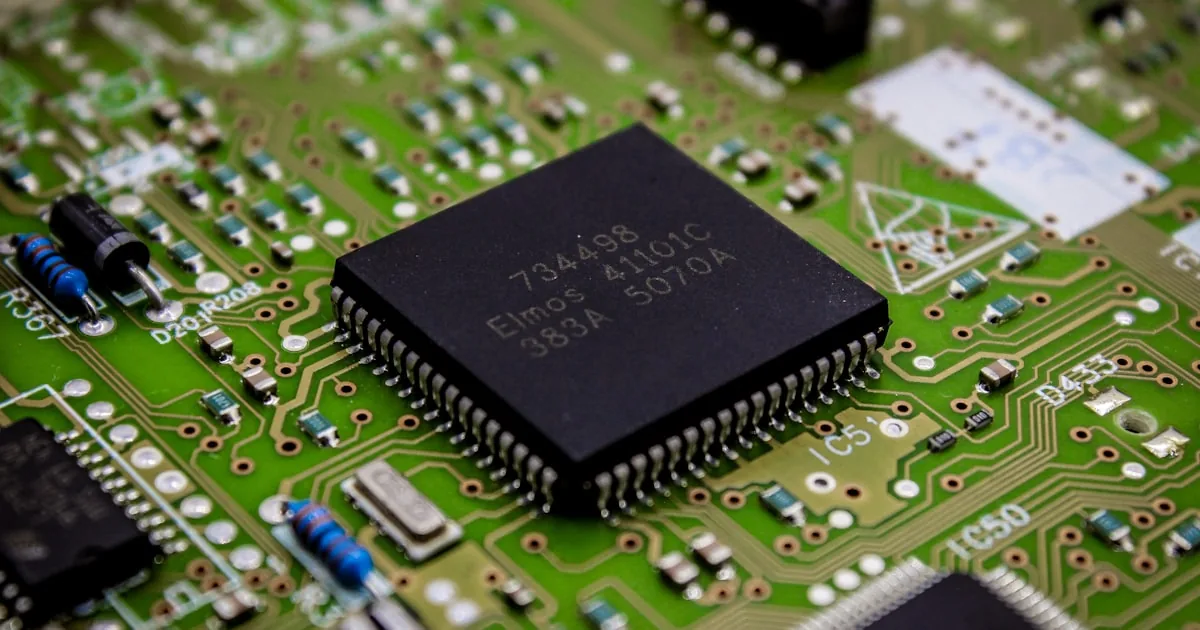
The tech industry has spent the last three years obsessed with size. Trillion-parameter models housed in warehouse-scale data centers have dominated headlines, promising human-level reasoning if given enough gigawatts of power. However, a quiet counter-revolution is taking place on the hardware fringe: the rise of ultra-compact, agentic micro LLMs designed to run locally on tiny devices without touching the internet.
Recent releases, such as Needle2—a sub-15MB agentic model designed for smartphones, wearables, and microcontrollers—alongside Meta's 30B Muse Glimmer optimized for local agent workflows, mark a pivotal shift in AI engineering. We are moving from monolithic cloud query engines toward distributed, ambient intelligence.
The Friction of Cloud-Only AI Architecture
Relying entirely on remote data centers for every interaction creates severe structural bottlenecks. Consider a simple consumer application: a wearable device analyzing continuous biometric signals or a smart home sensor detecting anomalous vibration patterns in industrial equipment. Sending every continuous data stream over cellular or Wi-Fi networks to a remote server introduces noticeable latency, consumes substantial battery power, and exposes private telemetry to potential network interceptions.
Furthermore, cloud API pricing models penalize continuous background execution. When an AI agent must poll environment metrics every few seconds to decide whether to take an action, round-trip cloud requests quickly become economically unviable.
Cloud-based processing also introduces a single point of failure. If internet connectivity drops, the intelligence of smart devices completely evaporates. For autonomous robotics, medical sensors, and security hardware, latency spikes or connectivity losses are unacceptable operational risks.
Decoding the 14MB Engineering Breakthrough

How can a neural network under 15 megabytes display genuine agentic functionality? The answer lies in targeted architectural specialization rather than generalized world knowledge.
Instead of trying to memorize historical facts, write poetry, or translate fifty languages, micro LLMs like Needle2 focus strictly on state tracking, tool invocation, and structural decision-making. By pairing extreme quantization with specialized instruction tuning, researchers strip away descriptive baggage while preserving logical branching capabilities.
{
  "trigger": "sensor_threshold_exceeded",
  "action": "isolate_valve",
  "confidence": 0.98
}
Running entirely in local RAM on microcontrollers, these models execute intent recognition and local tool routing in single-digit milliseconds. Rather than replacing massive frontier models, they act as immediate reflexes for physical hardware.
The Emergence of Hierarchical Agent Architecture
The future of software architecture is neither purely local nor exclusively cloud-based. Instead, we are entering the era of hierarchical multi-agent systems.
In this layout, low-latency micro-agents sit at the edge of the network. They process ambient sensor feeds, filter out noise, handle routine local commands, and enforce strict privacy filters. When a task requires deep contextual reasoning, complex mathematical synthesis, or broad internet access, the local edge agent packages a clean context payload and escalates the request to a mid-tier local model (like a 30B local model running on a workstation) or a cloud-hosted LLM.
This tiered approach dramatically reduces cloud computing bills while providing instant user responsiveness. Privacy is preserved because sensitive raw telemetry never leaves the local device; only anonymized high-level summaries are transmitted upstream when necessary.
Strategic Implications for Product Engineers
For software developers and system architects, the advent of micro-agent models demands a mental pivot away from simple API wrappers toward embedded systems design.
First, memory management and latency budgets return as primary engineering constraints. Instead of crafting thousands of tokens of prompt context, engineers must design tight, standardized tool definitions that micro-models can parse reliably with minimal parameter overhead.
Second, reliability testing shifts toward local edge cases. Edge agents operate in noisy real-world environments with direct access to physical triggers, hardware peripherals, or sensor registers. Ensuring deterministic safety bounds when an AI agent acts directly on hardware is far more critical than optimizing chat style.
Finally, developer tooling will evolve. Deployment pipelines will need to package model weights directly alongside firmware binaries, treating neural parameters as compiled assets rather than external dependencies.
The Horizon of Ambient Computing
The true promise of artificial intelligence was never to force users into a chat interface to ask questions continuously. It was to create invisible, helpful automation that operates seamlessly in the background.
Micro LLMs like Needle2 provide the missing software primitive for true ambient computing. By bringing fast, agentic decision-making directly onto microchips, wearables, and local devices, technology becomes more responsive, private, and resilient. The future of AI is not just getting bigger in the cloud—it is getting sharper, faster, and much smaller right at our fingertips.


Loading comments…