
Not long ago, launching a functional software product required weeks of engineering, design iteration, and infrastructure setup. Today, generative AI tools, LLM code assistants, and automated app builders have compressed that timeline from weeks to minutes. You type a prompt, and a fully working web app, browser extension, or dashboard appears on your screen.
While this democratization of software creation is celebrated as a massive productivity leap, it has triggered a profound economic shift: the TEMU-fication of software, digital goods, and services. Much like cross-border e-commerce platforms flooded consumer markets with unbranded, dirt-cheap, direct-from-factory physical goods, AI is flooding the digital landscape with an infinite supply of hyper-cheap, easily replaceable software products.
The Era of Infinite Software Supply
For decades, software enjoyed unique economic characteristics: high upfront development costs paired with near-zero marginal distribution costs. If you spent six months writing a niche productivity utility or a PDF converter, you could charge a monthly subscription fee and build a sustainable business. The technical barrier to entry protected your pricing power.
That moat has effectively evaporated. When anyone with an LLM prompt can replicate a standard web application in an afternoon, the technical cost of reproduction drops to zero. We are transitioning from an era of software scarcity to an era of software abundance—or more accurately, software noise.
Marketplaces, app stores, and developer platforms are rapidly filling with disposable applications. Need a specific invoice generator, a specialized habit tracker, or an AI wrapper for document summarization? Hundreds of near-identical options appear overnight, created by indie hackers and prompt engineers leveraging the same underlying model APIs.
The Dynamics of Digital TEMU-Fication
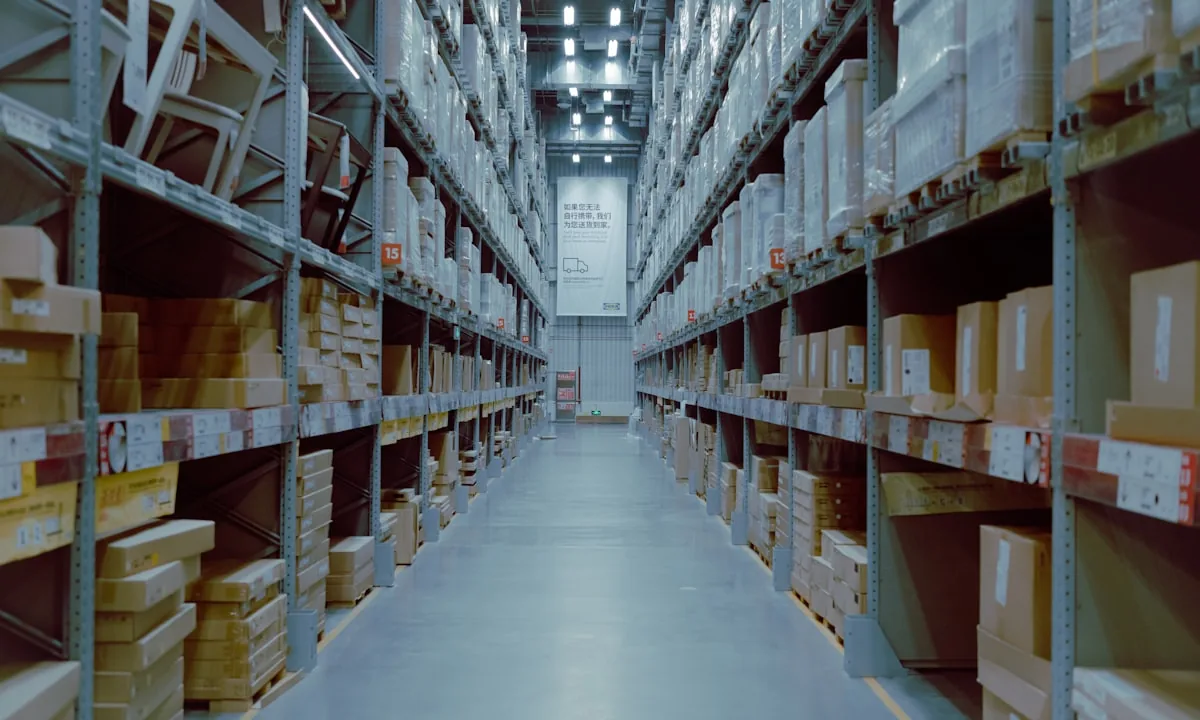
This transformation manifests in several clear patterns across the tech ecosystem:
- Price Collapse and Race to the Bottom: Subscriptions for generic micro-tools are becoming unsellable. Users expect basic utilities to be free or near-free because they recognize that the underlying technology is commoditized.
- Disposable and Single-Use Apps: Users increasingly consume software like disposable goods. Rather than subscribing to a heavy multi-featured suite, users generate or download single-task scripts that fulfill an immediate requirement and are discarded immediately after.
- The Rise of Digital Slop: Just as physical marketplaces grapple with low-quality copycats, digital platforms face an influx of poorly optimized, unmaintained AI-generated codebases. Searching for reliable tools requires wading through layers of superficial, skin-deep applications.
Why Traditional SaaS Moats Are Crumbling
For years, indie developers were advised to build niche SaaS products—small, focused applications solving specific operational pain points for small businesses. The formula was simple: build a clean UI, connect a database, add Stripe payments, and market to a targeted audience.
Under the TEMU-fication framework, this formula faces systemic headwinds. Simple CRUD (Create, Read, Update, Delete) applications and thin API wrappers lack structural defensibility. If your core product proposition can be described in a two-paragraph system prompt, any competitor can clone your functionality, lower the price, and run automated marketing campaigns within hours. The traditional moat built purely on software implementation has collapsed.
Where True Value Accumulates
If code generation and basic feature assembly are no longer valuable, where does economic value actually move? History shows that when a resource becomes abundant, value shifts to adjacent bottlenecks:
- Trust, Security, and Compliance: In a sea of unverified AI code, enterprise users and security-conscious individuals pay a premium for verified security guarantees, SOC2 compliance, data privacy, and reliable uptime.
- Deep System Integrations: Standalone micro-apps are easily replaced, but software embedded deeply into complex enterprise workflows, proprietary hardware, or legacy database architectures remains highly defensible.
- Distribution and Community: When product features are commoditized, direct access to users becomes the ultimate asset. Creators with established audiences, strong brand affinity, and trusted distribution channels will capture value regardless of how easily the underlying code is replicated.
- Proprietary Data and Feedback Loops: Models and code may be universal, but domain-specific proprietary datasets, real-time telemetry, and tight user feedback loops allow products to deliver superior accuracy that generic AI tools cannot match.
How Builders Must Adapt in the AI Era
For software engineers, product designers, and tech entrepreneurs, the TEMU-fication of software is not a death sentence, but a mandate to redefine craftsmanship.
Stop competing on raw feature output or speed of basic code generation. The goal is no longer to be a fast typist of syntax, but an architect of resilient systems, domain solutions, and user experiences. Focus on solving hard operational problems where data integrity, security, and complex integration matter. Build relationships and distribution channels before writing a single line of code.
The era of selling simple, generic software at premium prices is closing. The future belongs to those who leverage infinite code to build high-trust, deeply integrated systems that deliver undeniable human value.


Loading comments…