
We live in a culture that equates inaction with failure, where every empty block on our calendars is expected to be filled with effort. Yet, does this relentless striving truly yield the fulfillment we seek, or does it merely leave us exhausted on our own path?
The Laughter of the River and the Trap of Striving
Have you ever paused to watch a mountain river flow past jagged rocks? The river does not rage against the stone or try to shatter the mountain to prove its strength. Instead, it gently curves around obstacles, yielding to the contours of the earth, eventually finding the most natural path downward. Soft and yielding as water is, over time it wears away the hardest granite.
In stark contrast, modern humans often burn through their vitality trying to force the world into alignment with their personal expectations. We demand that projects progress on strict weekly schedules, relationships remain flawless every day, and our minds maintain peak positivity at all times. When reality deviates from our plans, our instinctive response is to double down—pushing harder, straining against circumstances. This rigid insistence creates immense inner tension and disrupts the natural cadence of life.
Understanding Wu Wei: Effortless Action, Not Laziness
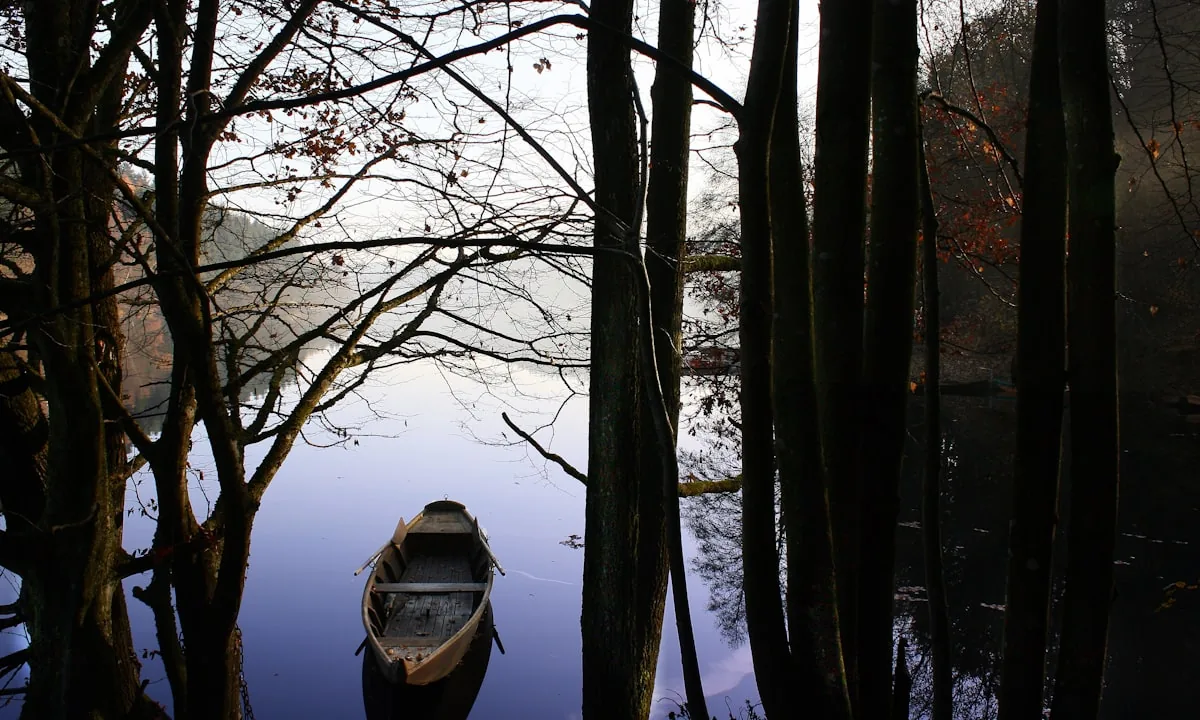
In Chapter 48 of the Tao Te Ching, Laozi wrote: "In the pursuit of knowledge, every day something is added. In the practice of the Tao, every day something is dropped. Less and less is done until one reaches non-action. When nothing is done, nothing is left undone."
The concept of Wu Wei (無爲) is frequently misunderstood as passivity, apathy, or an excuse to shirk responsibility. However, in Daoist philosophy, Wu Wei does not mean doing literally nothing; it means engaging in unforced action. It is the state of acting without egoic friction, without straining against the natural order of things, and without forcing outcomes through sheer willpower.
Consider a rower trying to navigate upstream against a fierce current. They strain every muscle, but the moment they pause, the current sweeps them backward. Conversely, an experienced navigator understands the water. They know when to hold the oars, when to rest, and how to harness the current to reach the shore safely with minimal energy. Wu Wei is precisely that art of knowing when to lift the oars.
Observing Nature to Reclaim Our Natural Rhythm
In the writings of Zhuangzi (specifically the chapter Nourishing the Lord of Life), there is a famous parable of Cook Ding carving an ox. Cook Ding did not use brute strength to chop through bone. Instead, he guided his blade through the natural spaces between the joints. Because he moved in harmony with the ox's intrinsic structure, his blade remained as sharp after nineteen years as if it had just come off the whetstone.
When we apply this perspective to our own lives, we discover that even complex problems contain natural spaces through which we can maneuver. Rush and force only tighten the knots we are trying to untie.
In his Meditations (Book 4.24), the Roman Stoic emperor Marcus Aurelius echoed a remarkably similar sentiment: "Most of what we say and do is not essential. If you can eliminate it, you will have more time, and more tranquility. Ask yourself at every moment, 'Is this necessary?'"
This timeless convergence between Eastern wisdom and Western Stoicism highlights a crucial truth: peace does not come from doing more, but from eliminating unnecessary friction and forced effort.
Practicing Unforced Action in Daily Life
Bringing the philosophy of Wu Wei into our modern routine does not require retreating into a remote monastery or abandoning our goals. Transformation begins with subtle shifts in how we relate to our actions:
- Recognize inner resistance: Whenever you feel drained by severe strain, pause and ask: Am I acting from genuine alignment, or am I forcing this simply to appease my anxiety and ego?
- Respect the natural timing of things: A tree does not grow twice as fast because you pour double the water on its roots. Certain seasons of life demand quiet, patient accumulation. Learning to wait without restlessness is a core discipline of Wu Wei.
- Focus on the process, relinquish the outcome: When working, immerse yourself fully in the craft itself rather than fixating on validation or future rewards. When the pressure to prove oneself evaporates, action becomes light, precise, and fluid.
Conclusion
Wu Wei does not diminish our achievements; it allows them to blossom naturally, like a lotus rising effortlessly above the water. When we stop demanding that the world bend to our immediate desires, reality opens up unexpected possibilities that brute force could never reveal.
As you go about your day today, ask yourself: Is there something in your life you are gripping too tightly? Would you dare to loosen your grip, take a deep breath, and let the natural current show you the way?


Loading comments…