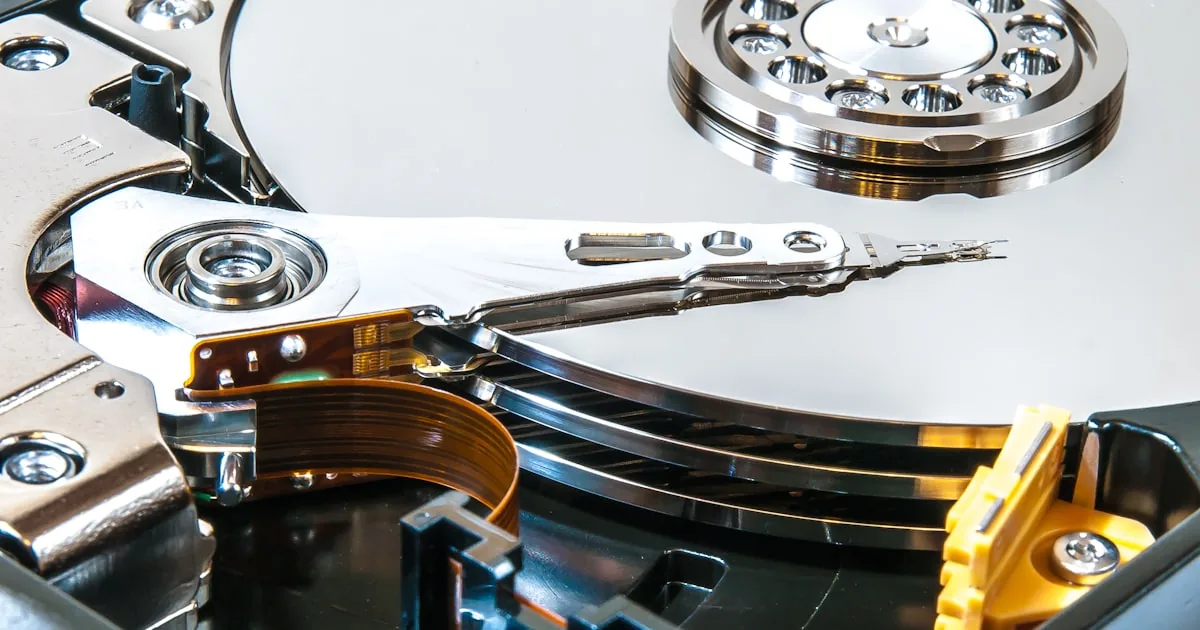
When hardware manufacturers go bankrupt or discontinue legacy software support, perfectly functional devices often end up as electronic waste. Recently, developers have started leveraging AI coding agents to reverse-engineer proprietary protocols and "vibe-code" custom system drivers, giving abandoned hardware a new lease on life.
From Web Apps to Low-Level Kernel Code
For the past two years, "vibe-coding" was mostly associated with generating React components, drafting boilerplate Python scripts, or building simple web applications. However, a recent project by developer Julien Bono demonstrates how AI capabilities are creeping into much deeper layers of the software stack.
Bono owned a 14-year-old Drobo 5D RAID array that was still physically working flawlessly. However, with the manufacturer defunct and upcoming macOS versions dropping support for legacy kernel extensions and Rosetta 2, the proprietary Drobo Dashboard software was rendered completely non-functional on modern Apple Silicon Macs. Facing the prospect of discarding perfectly good storage hardware, Bono decided to task Claude with reverse-engineering the hardware communication protocol and writing a native replacement driver.
The Reverse-Engineering Workflow with AI Agents
Instead of spending months studying Apple's DriverKit documentation or manually inspecting hex dumps, the developer supplied the AI model with legacy driver binaries, release notes, and system logs. The AI agent drafted a systematic 5-phase engineering plan:
- Device Probing: Writing a lightweight C utility (
droboprobe) to inspect USB communication interfaces on modern macOS builds. - Dispatch Table Extraction: Extracting memory selectors and structure payloads (such as the 1308-byte management struct) from the legacy kernel extension on an older Mac.
- Protocol Decoding: Documenting the proprietary "ESA" management protocol used to query array health, disk serial numbers, and storage volume metrics.
- Driver Development: Implementing a native DriverKit dext (
DroboDext) and navigating system entitlements. - GUI Companion App: Building a modern Swift-based status app (
ReDrobo) to replace the abandoned dashboard.
Throughout the process, the AI served as the primary system architect and code generator, while the human developer acted as the hardware test engineer, toggling system settings and feeding execution feedback back into the prompt context.
Overcoming Low-Level Security and Permission Traps
Writing low-level code for modern operating systems presents challenges that standard web development rarely encounters. Modern macOS enforces strict security boundaries, including System Integrity Protection (SIP) and explicit entitlements for kernel extensions.
During the build process, the developer encountered numerous packaging traps, bundle layout mismatches, and entitlement failures. Rather than guessing blindly, the developer and AI agent employed a binary search strategy across candidate entitlements to isolate the exact permission mask required for driver communication. Within a single afternoon, the pair successfully brought up a functional driver and menu-bar application that accurately reported RAID storage health and drive configurations on macOS 27.
Why This Matters for Tech Sustainability
This experiment highlights a fundamental shift in how we approach hardware longevity. Historically, when a company went out of business, its proprietary communication protocols died with it. Reverse-engineering drivers required specialized low-level engineering expertise, making it impractical for individual users to maintain orphaned devices.
By lowering the barrier to binary analysis and system-level C/Swift development, AI agents allow developers to create custom drivers in hours rather than months. This capability could significantly alter the economics of electronic waste. When software maintenance costs approach zero, hardware lifespans can be determined by physical durability rather than arbitrary vendor support deadlines.
Balancing Convenience and Security Risks
Despite the successful outcome, running kernel-level code generated by AI agents introduces clear safety trade-offs. Disabling security protections like SIP to load unnotarized drivers is not a solution suitable for everyday non-technical users. Furthermore, giving LLMs free rein over low-level storage routines carries inherent data integrity risks if edge cases are handled improperly.
Nevertheless, the transition of vibe-coding from high-level web frameworks to low-level driver development marks an important milestone. As AI models become better at analyzing binary structures and system APIs, vibe-coding is evolving from a convenient productivity shortcut into a practical tool for digital preservation and hardware sustainability.


Loading comments…