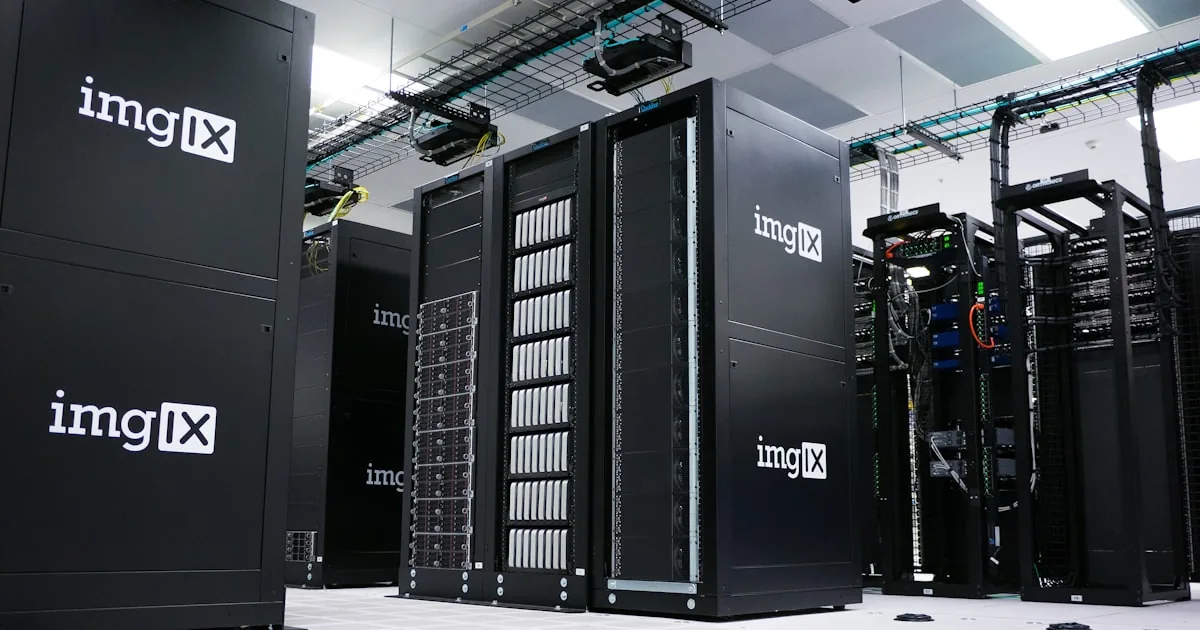
The AI boom of the last two years has been defined by an insatiable appetite for compute. From major tech giants to scrappy startups, companies have been hoarding Nvidia GPUs like B200s and H100s, treating them as digital gold. Raising hundreds of millions of dollars to secure a massive cluster of 10,000 or 100,000 GPUs is the standard playbook for anyone trying to build frontier language models. But as the hype cycle matures and new generations of chips loom on the horizon, a multi-billion dollar question is quietly surfacing in Silicon Valley: what is a used AI GPU cluster actually worth?
Unlike the secondary market for used cars, enterprise servers, or even consumer graphic cards, the market for massive, depreciated AI clusters is virtually nonexistent. It is completely uncharted territory. And for an industry built on the perceived value of these physical assets, that lack of clarity is a looming financial timebomb.
The Illusion of the Sum of Its Parts
To understand why pricing a used GPU cluster is so difficult, we have to look at how they are built. A modern AI supercomputer is not just a room full of expensive chips. The GPUs themselves—while costing tens of thousands of dollars each—are only part of the equation. The true value of a cluster comes from how those chips are networked together using specialized, high-speed interconnects like NVLink and InfiniBand, along with bespoke cooling systems and power distribution units.
When you buy a cluster, you are paying a massive premium for the ability to train a single model across thousands of processors simultaneously. But what happens if you need to sell it?
If a startup goes under or simply wants to upgrade to newer hardware, they face a brutal reality. You cannot easily sell a 10,000-GPU cluster to another company because the buyer pool is microscopically small. Very few organizations have the data center capacity, the multi-megawatt power agreements, or the liquid capital to take over a massive, pre-configured supercomputer.
The logical fallback might be to disassemble the cluster and sell the GPUs individually or in small batches. However, doing so destroys the premium you paid for the networking fabric. Stripped of their high-speed interconnects and bespoke infrastructure, the GPUs become just expensive, individual components that are far less useful for serious AI training.
Obsolescence as a Step Function
In traditional enterprise IT, hardware depreciates linearly. A server might lose 20% of its value every year until it is finally recycled. In the AI arms race, obsolescence behaves more like a step function.
Consider the transition from Nvidia's A100 to the H100, and now to the upcoming Blackwell architecture. Each new generation doesn't just offer incremental improvements; it delivers massive leaps in performance and energy efficiency. When training a frontier AI model can cost tens of millions of dollars in electricity alone, older chips don't just become slower—they become economically unviable. Why spend $20 million on power to run a cluster of aging A100s for three months when a newer Blackwell cluster could do the same math in three weeks for a fraction of the energy cost?
Because the frontier of AI is moving so fast, older clusters get pushed down the compute food chain at breakneck speed. They transition from "frontier model trainers" to "fine-tuning rigs" to "inference endpoints" in a matter of months, shedding value at every step.
The Balance Sheet Reality Check

This isn't just an academic engineering problem; it’s a massive financial risk. Over the past few years, countless AI startups have raised venture capital using their compute capacity as collateral. Banks and alternative lenders have financed these multi-million dollar purchases under the assumption that the hardware retains significant residual value.
If it turns out that a used H100 cluster is worth only 20% or 30% of its original purchase price just two years down the line, the balance sheets of many AI labs and cloud providers are heavily inflated. The collateral backing billions of dollars in debt might be largely illusory. We haven't seen a wave of liquidations yet because the AI boom is still heavily funded and demand outstrips supply. But as early clusters age out of their prime, the market will eventually have to price them accurately.
Navigating the Capex Hangover
The tech industry is currently in the middle of one of the largest capital expenditure cycles in history, pouring hundreds of billions into physical infrastructure. While software margins are famously high, hardware requires dealing with the immutable laws of physics and economics: things degrade, get outdated, and lose value.
Nobody truly knows what a used GPU cluster is worth because nobody has had to sell one at scale in a mature market yet. But as the first wave of AI hardware ages into obsolescence, the industry is about to learn a harsh lesson in physical asset depreciation. The true cost of the AI revolution might not be fully understood until the bill for the hardware finally comes due.
Loading comments…