If you browse developer forums today, you will frequently hear stories of solo founders building full-featured web applications, mobile apps, and automated backend infrastructure in just a few weekends. On the surface, it looks as though software development has been compressed to a single workstation. But if you examine the actual operational complexity, dependency tree, and deployment surface of these modern projects, a surprising truth emerges: small software teams no longer truly exist.
Even when a project has only one human name attached to its commit log, the underlying reality is that the developer is orchestrating an engineering organization's worth of complexity. Between generative AI coders, cloud infrastructure services, automated security scanners, and dozens of API integrations, the operational scale of today's "small" team rivals what required twenty engineers a decade ago.
The Mirage of the Solo Developer
Historically, team size was measured by headcount. A three-person team meant three human minds splitting the tasks of database design, frontend rendering, server configuration, and customer support. The physical constraint of human bandwidth naturally limited the scope of what that team could construct and maintain.
Today, generative AI tools and specialized developer APIs have broken that physical constraint. A single engineer using modern AI coding agents can generate thousands of lines of syntactically sound code in an afternoon, scaffold complex database schemas with natural language prompts, and deploy multi-region containerized services with single-command workflows.
However, high output volume does not equal low architectural complexity. When one developer ships features at the speed of a ten-person team, they also inherit the maintenance debt, security vulnerabilities, and system edge cases of a ten-person codebase. The team size on paper may be one, but the codebase demands the governance of a full department.
The Cognitive Shift: From Authoring to Orchestrating
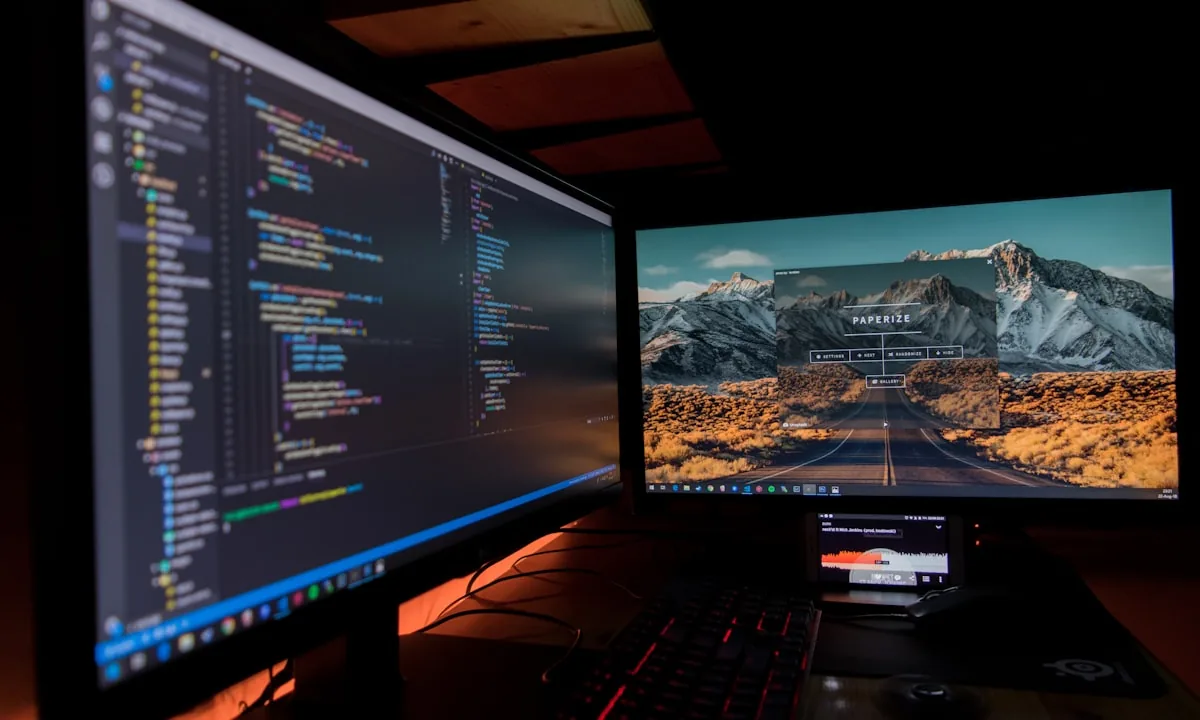
The fundamental nature of software engineering has shifted from code generation to systems orchestration. In a traditional small team, developers spent most of their working hours writing logic, debugging edge cases, and discussing technical implementation details.
In contrast, the modern developer operates more like a chief architect or technical director. On any given afternoon, a solo creator might be:
- Reviewing and auditing pull requests generated by AI agents.
- Managing cloud permissions across serverless functions and vector databases.
- Triaging security vulnerability alerts triggered by deeply nested package dependencies.
- Balancing token budgets and API rate limits across multiple LLM providers.
None of these tasks are inherently "small." Each component brings its own operational overhead, failure modes, and monitoring requirements. When something breaks in production—whether it is a breaking API change from a third-party vendor or a subtle edge case introduced by an AI coding assistant—the solo developer must instantly context-switch across five distinct engineering domains to resolve it.
Dependency Inflation and Supply Chain Risk
Another key reason small teams have vanished is the explosion of the modern software supply chain. Decades ago, building a utility meant writing custom C or C++ logic from scratch or using standard system libraries. Modern software construction, by contrast, resembles assembling pre-fabricated Lego bricks connected by network protocols.
A modern web application often relies on hundreds of open-source packages, npm modules, or Rust crates. Each dependency is itself maintained by external contributors, introducing continuous streams of updates, deprecation warnings, and security patches. Furthermore, as developers increasingly integrate third-party AI models into their applications, they depend on external infrastructure that can change pricing models, deprecate endpoints, or experience outages without notice.
Managing this web of external dependencies requires continuous vigilance. A small team in headcount is never a small team in dependencies; they are part of a global, interconnected software ecosystem that requires constant maintenance and risk mitigation.
Re-defining Engineering Velocity and Discipline
Acknowledging that small software teams no longer exist is not a reason for pessimism; rather, it is a call for architectural discipline. If you are operating as a solo developer or working within a lean startup, recognizing the true scale of your software is essential to avoiding burn-out and system collapse.
To navigate this new landscape effectively, modern engineers must adopt three critical practices:
First, prioritize radical simplification over feature sprawl. Just because an AI assistant can write a complex microservice architecture in five minutes does not mean your project should adopt one. Every additional moving part increases the maintenance burden exponentially.
Second, build strict testing and validation guardrails. When synthetic code can be produced instantly, human code review becomes the bottleneck. Automated unit tests, integration benchmarks, and deterministic linting rules are essential tools to prevent AI-generated code from accumulating silent technical debt.
Third, treat AI as an amplifier, not a replacement for domain judgment. AI tools can generate code patterns effortlessly, but they lack context regarding your business goals, long-term maintenance costs, and system security boundaries. The ultimate responsibility for system integrity remains entirely human.
Conclusion
The myth of the solo developer building empires in isolation is tempting, but it misunderstands the reality of modern tech. We may have fewer humans sitting in the same office, but the systems we build and maintain are larger, faster, and more interconnected than ever. The definition of a software team has expanded beyond human headcount to encompass the entire network of AI collaborators, cloud services, and external dependencies. Understanding this reality is the first step toward building resilient software in the modern AI era.


Loading comments…