
Every autumn, millions of migratory songbirds undertake epic journeys across thousands of miles, crossing oceans and deserts without a single wrong turn. For decades, scientists struggled to explain how a tiny bird weighing no more than a coin could navigate Earth's vast magnetic field with military precision. The answer, as recent biophysics research reveals, is mind-bending: migratory birds are equipped with a natural quantum compass located directly inside their retinas.
The Mystery of the Invisible Highway
Imagine steering a vessel across a featureless ocean at night without stars, landmarks, or satellite navigation. For humans, getting lost would be inevitable. Yet European robins and other migratory species make this journey annually, often returning to the exact same branch of the exact same tree where they nested the previous year.
Researchers knew early on that birds could detect Earth's magnetic field—a subtle magnetic force roughly 100,000 times weaker than a simple refrigerator magnet. But how could a biological organism, made of soft organic tissue, pick up such a delicate signal? Traditional magnetoreception theories pointed to tiny iron-mineral crystals in bird beaks acting like microscopic compass needles. While iron-based sensors do exist in some species, they alone could not explain the incredible sensitivity and light-dependence of bird navigation.
It turns out the real magic happens not in the beak, but in the eye, where quantum mechanics takes center stage.
Cryptochrome 4: Nature's Quantum Sensor
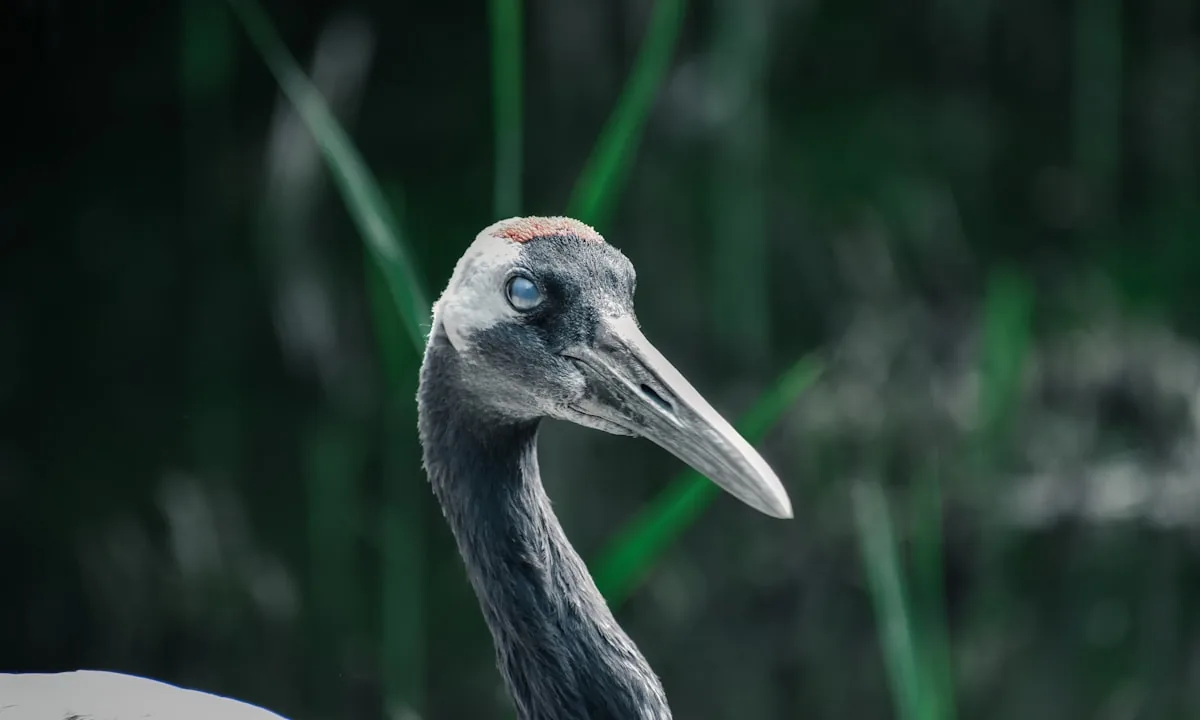
Inside the eyes of migratory birds resides a specialized protein called Cryptochrome 4 (Cry4). Located in the photoreceptor cells of the retina, Cry4 acts as a light-activated chemical switch.
When blue light from the sun or night sky strikes a Cry4 protein, it triggers a lightning-fast movement of an electron between molecules within the protein—moving from a chain of tryptophan amino acids to a molecule called flavin adenine dinucleotide (FAD).
This single electron transfer creates a pair of molecules with unpaired electrons, known in chemistry as a "radical pair." Because of the fundamental laws of quantum physics, the spins of these two unpartnered electrons remain quantum-entangled.
Quantum entanglement occurs when two subatomic particles become deeply interconnected, so that the quantum state of one instantly influences the state of the other, regardless of distance. In the bird's eye, the entangled radical pair exists in a delicate superposition between two distinct chemical states.
Seeing the Magnetic Field as a Head-Up Display

This is where Earth's magnetic field plays its role. Even though Earth's magnetic force is incredibly weak, it is strong enough to nudge the balance between these two entangled chemical states. As the bird tilts its head or changes direction, the alignment of its retina relative to Earth's magnetic field lines alters the duration and output of the chemical reaction.
What does the bird actually experience? Scientists believe the bird does not "feel" magnetic north the way a compass needle tugs on a pivot. Instead, the signal from Cry4 is integrated directly into the visual cortex.
In effect, the bird likely sees Earth's magnetic field overlaid directly onto its normal vision, acting like a high-tech Head-Up Display (HUD) in a fighter jet cockpit or an augmented reality headset. As the bird scans the horizon, magnetic field lines appear as subtle patterns of light and dark shaded overlays. A bright ring might indicate where magnetic field lines dip into the ground at a steep angle, offering a visual roadmap across the globe.
Quantum Physics in a Warm, Noisy Environment
Beyond solving a biological mystery, this discovery has stunned quantum physicists. For decades, engineers trying to build quantum computers have struggled with quantum coherence—the fragile state required for entanglement. In laboratory settings, quantum coherence usually collapses within microseconds unless kept near absolute zero temperature (-273°C) in total isolation.
Yet, inside the warm, wet, and thermally noisy environment of a living bird's eye, evolution has perfected a mechanism that preserves quantum entanglement long enough to perform complex spatial calculations.
Cry4 proteins in migratory birds like robins show significantly higher magnetic sensitivity than identical proteins found in non-migratory birds like pigeons or chickens. Millions of years of natural selection have fine-tuned the molecular structure of Cry4 to optimize quantum coherence in ambient conditions.
A New Frontier for Technology and Science
The quantum compass of migratory birds reminds us that nature solved quantum engineering long before humans even discovered the atom. By studying how Cry4 maintains quantum states in room-temperature biological systems, bioengineers hope to design a new generation of ultra-sensitive quantum sensors, navigation systems that operate without GPS, and robust quantum computing architectures.
The next time you spot a small songbird resting on a fence before resuming its southward migration, consider the extraordinary reality taking place beneath its feathers. Behind those bright eyes lies an ancient, light-driven quantum computer, rendering the invisible forces of our planet into a visual map of the sky.



Loading comments…