
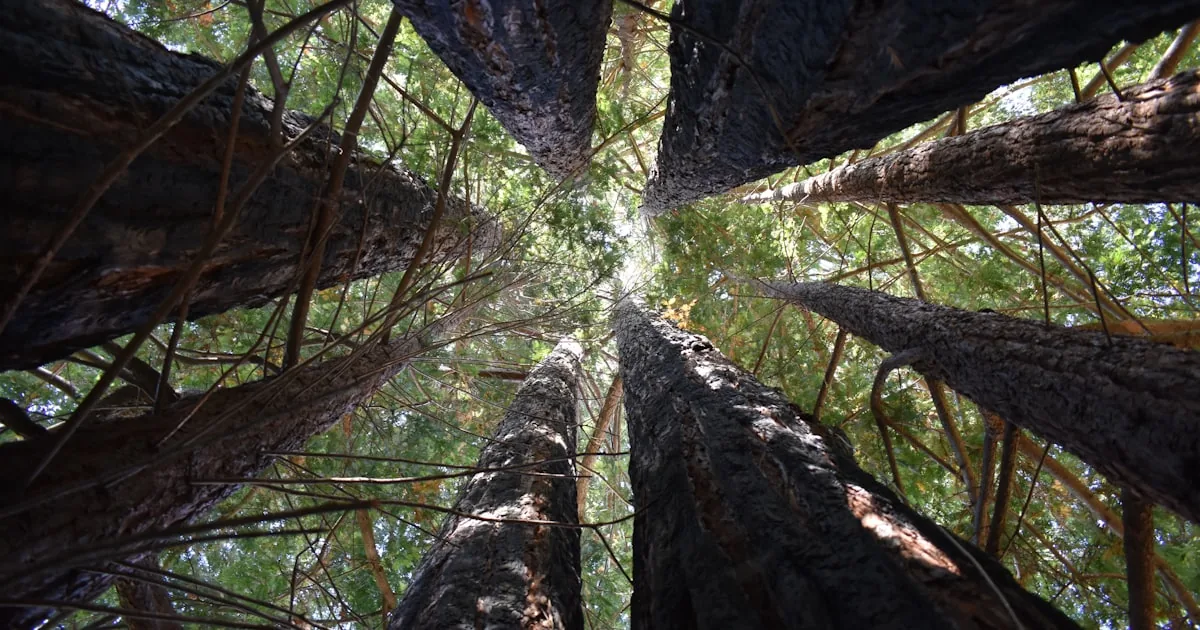
Have you ever walked through a quiet forest, looked up at the towering canopy, and thought about how still and isolated every tree seems? To the human eye, a tree is a solitary pillar of wood, standing alone in its spot for centuries. But as it turns out, the silence of the forest is an illusion. Beneath your boots lies a bustling, high-speed communications network that rivals our modern technology.
Welcome to the "Wood Wide Web," a hidden underground internet where trees are constantly texting, sharing resources, and even sending out emergency alerts to their neighbors. For decades, scientists and foresters viewed woods simply as collections of individual trees locked in a ruthless competition for sunlight, water, and soil nutrients. But thanks to the groundbreaking work of ecologists like Dr. Suzanne Simard, we now understand that a forest is not a battleground. Instead, it is a giant, interconnected super-organism. And the secret to this incredible connection isn't in the wood or the leaves at all—it's in the fungi.
The Fiber Optics of the Forest Floor
To understand how a pine tree can communicate with a birch tree, we have to look underground at a microscopic partnership called the mycorrhizal network. The word itself is a mashup of Greek: "myco" means fungus, and "rhiza" means root.
If you were to gently dig up the soil around a tree's root system, you wouldn't just see brown roots. You would find billions of tiny, white, cobweb-like threads called mycelium. These fungal threads attach themselves directly to the tree's roots, creating a biological plug. From there, they weave their way through the soil, eventually connecting to the roots of another tree, and then another. A single footstep in a healthy forest can cover hundreds of miles of these densely packed fungal threads. They wire nearly every plant in the forest into the same massive, underground grid.
At its core, this is a classic symbiotic relationship—a biological barter system. Trees are masters of photosynthesis, using their leaves as solar panels to turn sunlight and carbon dioxide into rich, sugary carbohydrates. Fungi, however, live in the dark and cannot make their own food. But what their vast, microscopic webs are incredibly efficient at is mining the soil for water and vital minerals like phosphorus and nitrogen, which are hard for thick tree roots to extract.
So, they make a trade. The tree gives the fungus about a third of the sugar it produces, and in return, the fungus delivers the essential water and minerals the tree needs to grow. But the fungi do more than just act as a delivery service for a single plant; they act as the biological fiber-optic cables connecting the entire ecosystem.
The Social Lives and "Mother Trees"
Once plugged into this fungal internet, trees can do astonishing things. They don't just survive on their own; they actively socialize, nurture, and support one another.
Imagine you have a large, ancient tree standing tall in the bright, upper canopy. Scientists fondly call these established giants "Hub Trees" or "Mother Trees." Because of their size and access to abundant sunlight, these giants produce excess sugar. Through the mycorrhizal network, a Mother Tree can actually sense when younger saplings growing in the dark, shaded understory are struggling to get enough light. Like a parent caring for a child, the Mother Tree will pump its extra sugar and water directly into the fungal network, routing the nutrients specifically to the hungry saplings to help them survive. Scientists have even tracked radioactive carbon isotopes moving from Mother Trees to dying saplings miles away!
It gets even more incredible. Trees also use this network to send distress signals. If a tree is being attacked by a swarm of hungry aphids or caterpillars, it doesn't just suffer in silence and wait to be eaten. It immediately sends chemical warning signals—like a forest-wide emergency broadcast—through the fungal threads. When neighboring trees receive this chemical "text message" that a threat is nearby, they don't wait to see bugs. They proactively start pumping foul-tasting tannins or toxic chemicals into their own leaves to ward off the impending attack. The forest acts as a unified defense system.
A Lesson in Community from the Soil
This underground discovery fundamentally changes how we view nature, biology, and evolution. The old Darwinian idea of purely cutthroat competition—where every tree fights only for itself and the strongest shade out the weak—is only half the story. Forests are deeply cooperative, egalitarian communities.
When a majestic Mother Tree is old and dying, it doesn't selfishly take its resources to the grave. In its final months, it will dump its remaining carbon, nutrients, and defensive chemicals into the fungal network, essentially passing on its life savings and biological wisdom to the next generation of the forest before it falls.
The next time you take a hike through the woods, take a moment to stop and look down. Beneath your feet is a vibrant, ancient, and highly communicative society. Millions of invisible conversations are happening right now, just inches below the dirt. It is a powerful reminder that in nature, survival isn't just about the fittest individual—it's about the resilience and strength of the connected community.


Loading comments…