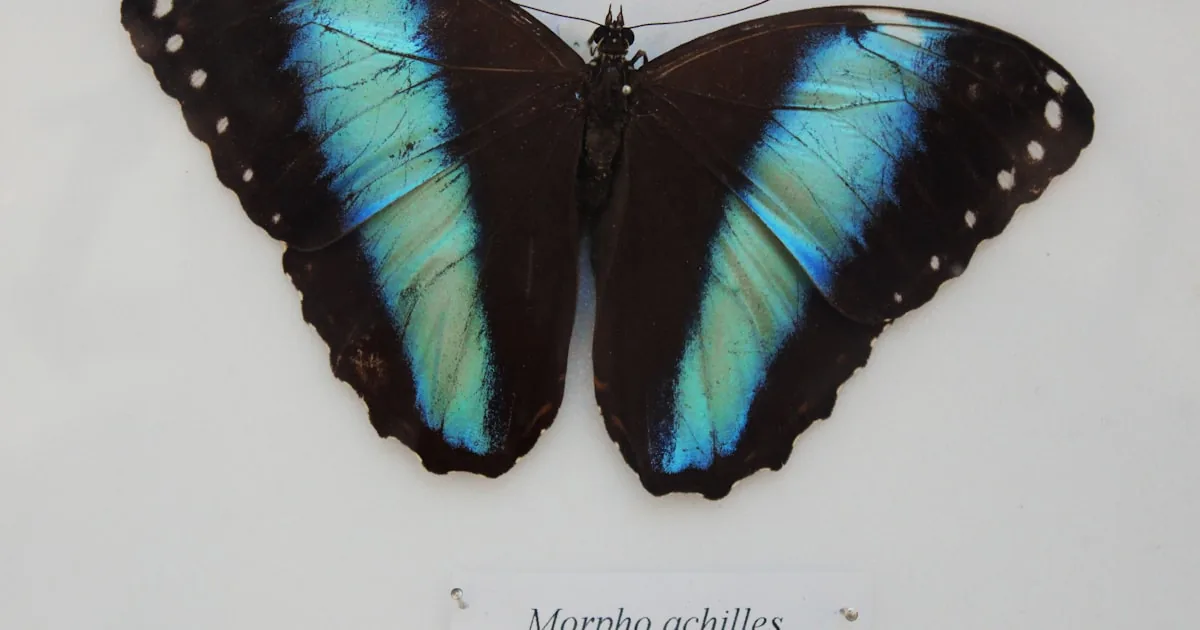
Discover how Morpho butterflies and peacocks create dazzling blue and iridescent colors without a single drop of pigment, relying entirely on microscopic light architecture.
Have you ever held a Morpho butterfly specimen in a science museum and noticed how its wings gleam with an almost blinding, electric blue? If you were to grind those wings into a fine powder, you might expect a bowl of bright blue dust. But curiously, the moment you crush them, that brilliant blue vanishes completely, leaving behind nothing more than a dull, brownish-gray smudge.
This baffling illusion is one of nature’s most elegant secrets. The Morpho butterfly does not contain any blue pigment whatsoever. In fact, true blue pigments are extraordinarily rare in the animal kingdom. Instead, nature achieves this dazzling color using a trick of pure physics known as structural color. While human artists rely on chemical dyes to absorb and reflect light, nature often builds microscopic cathedrals that bend, split, and dance with light waves.
Pigments vs. Architecture: Two Ways to Paint the World
To understand why a butterfly wing behaves like a high-tech optical device, we first need to look at how everyday color works. When you look at a red apple or a green leaf, you are witnessing chemical pigmentation. The leaf contains chlorophyll molecules that absorb red and blue wavelengths from sunlight while reflecting green light back to your eyes.
Chemical pigments have a fundamental limitation: they degrade over time. Exposure to ultraviolet rays from the sun breaks down chemical bonds, causing painted walls, vintage clothing, and printed photos to fade into muted yellow tones.
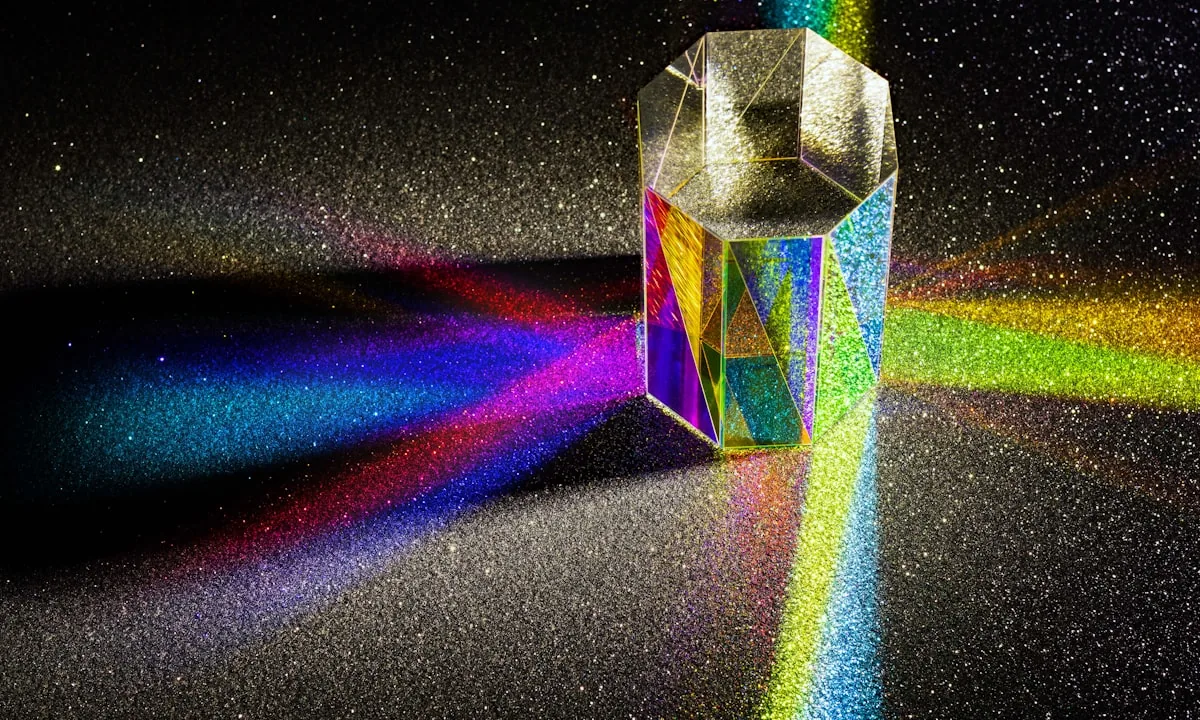
Structural color operates on an entirely different principle. Instead of absorbing light with chemicals, materials with structural color manipulate the physical behavior of light waves using nanoscale structures. When light encounters tiny features that match the size of its own wavelengths—measured in mere nanometers—it bounces off multiple surfaces simultaneously. Depending on the spacing and shape of these structures, light waves can either reinforce each other or cancel each other out in a phenomenon called optical interference.
The Morpho’s Nanoscale Christmas Trees
If you zoom in on a Morpho butterfly wing using a scanning electron microscope, the secret immediately reveals itself. The wing is covered in thousands of overlapping microscopic scales. Looking closer still, each individual scale features a series of parallel ridges that resemble microscopic Christmas trees made of chitin, the same tough material that forms crab shells.
These chitin trees have branches stacked atop one another with uncanny precision. The gap between each branch is precisely 200 nanometers—roughly half the wavelength of blue light. When white sunlight hits these tiny branches, a remarkable transformation occurs:
- Constructive Interference: Blue light waves bounce off the branches in perfect synchronization. Their crests align with other crests, amplifying the blue wavelength and reflecting it outward in an intense, concentrated beam.
- Destructive Interference: Red, green, and yellow light waves hit the branches at mismatched intervals. Their crests collide with troughs, effectively canceling each other out.
The result is a blue so intense and saturated that it can be seen from hundreds of meters away through a dense tropical rainforest canopy. Because this color depends entirely on physical geometry rather than chemical dyes, it will never fade as long as the microscopic structure remains intact. Morpho butterfly specimens preserved in museums for over two centuries still shine as brightly today as they did on the day they were collected.
From Peacock Tails to the Brightest Berry on Earth
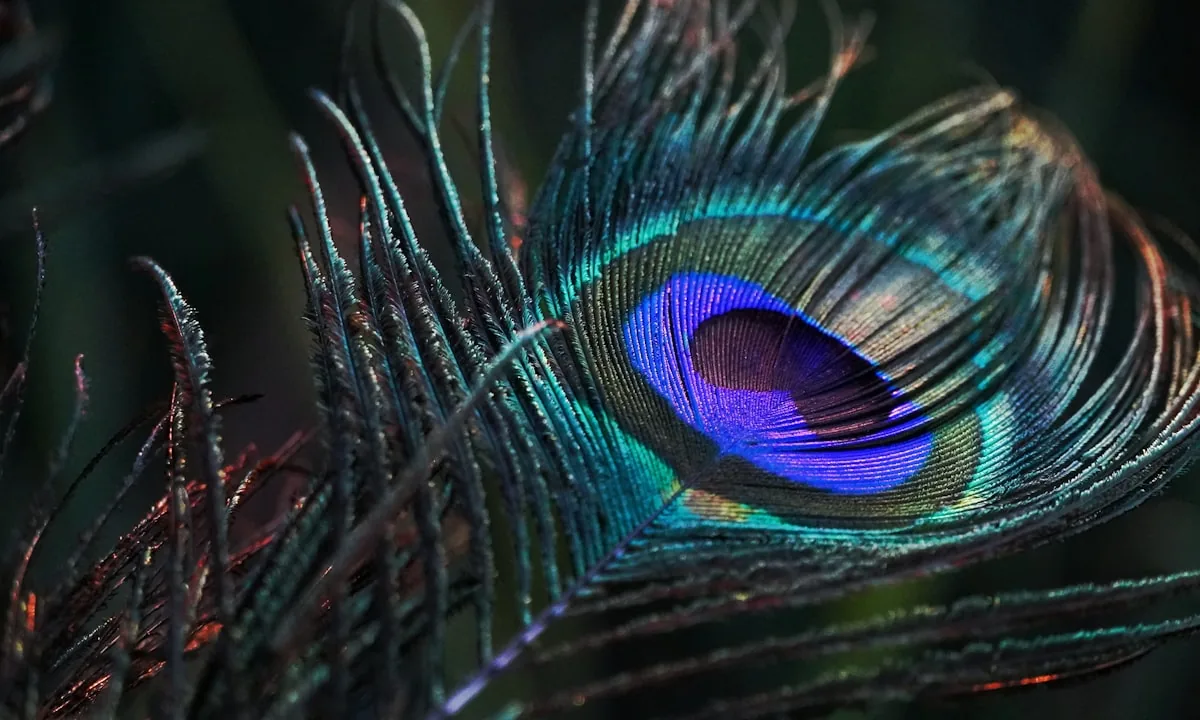
Morpho butterflies are far from the only masters of structural color. Look closely at a peacock’s tail feather. Beneath the surface, the feather contains a brown pigment called melanin. But above that pigment lies a grid of tiny air pockets and melanin rods arranged like microscopic crystal lattices. By adjusting the spacing between these rods, peacocks can produce shimmering emerald greens, deep sapphires, and golden bronzes—all from the exact same raw material.
An even more astonishing example comes from a small African plant named Pollia condensata. This plant produces small, shiny berries that display an intense metallic blue. Scientific analysis revealed that these berries contain zero blue pigment. Instead, their cell walls are composed of cellulose fibers stacked in spiraling layers like a microscopic spiral staircase. As light passes through the staircase, only left-handed circularly polarized blue light is reflected. It is considered the most intense natural blue substance known to science, remaining vibrant even a century after being harvested.
Nature’s Blueprint for Future Technology
Unlocking the physics of structural color is not just an academic exercise—it is inspiring a revolution in materials science and green technology. Human engineering has relied heavily on chemical dyes and paints, many of which contain toxic heavy metals or require energy-intensive manufacturing processes. By studying how nature manipulates light, scientists are creating revolutionary new materials:
- Fade-Proof Paint: Researchers are developing structural paints made from harmless silica nanoparticles. A single thin layer can coat an airplane or building without adding heavy weight or fading under harsh solar radiation.
- Cooling Coatings: Because structural surfaces can be designed to reflect specific wavelengths of infrared solar heat, buildings coated with structural materials can stay significantly cooler, drastically reducing air conditioning energy needs.
- Ultra-Low Energy Displays: Next-generation electronic readers use reflective structural displays that mimic butterfly wings, allowing bright outdoor viewing under direct sunlight while consuming a fraction of battery power compared to traditional LED screens.
- Anti-Counterfeiting Security: Banknotes and passports now incorporate microscopic structural color arrays that are impossible to copy using standard printers or digital scanners.
The Magic Hidden in Plain Sight
Science often gets an unfair reputation for stripping the mystery out of the natural world. But discovering that a butterfly’s vivid blue comes from microscopic nanoscale architecture rather than a simple dye does not make it any less magical. In fact, it reveals a far grander reality: every flutter of a wing is a masterclass in quantum optics and physical geometry.
The next time you catch a glimpse of an iridescent bird feather or a shimmering beetle shell, pause for a moment. You are not just looking at a color; you are witnessing light itself being reshaped by millions of years of evolutionary engineering. All it takes to see the universe in a new way is a little bit of curiosity.


Loading comments…